The concept of day to night festival outfits sounds simple until you are standing in 100-degree desert heat at 2 PM knowing the same ground will be 65 degrees by midnight. That 35-degree swing is the reality at events like EDC Las Vegas, Coachella, and every multi-stage desert festival that runs from afternoon sun to sunrise sets. The ravers who look effortless across that entire range are not packing two outfits — they are building one outfit designed to transform. This is the strategy behind making a single wardrobe feel like two completely different vibes without a trip back to camp.
The Temperature Problem Nobody Warns You About
Desert festivals are the most dramatic example, but the day-to-night temperature shift hits everywhere. Coachella's Indio Valley pushes past 100 degrees in April afternoons before dropping into the mid-50s after dark. EDC Las Vegas starts warm at dusk and slides into the low 60s by the time the sunrise sets hit. Even coastal events like Beyond Wonderland see 20-degree swings once the marine layer rolls in.
The instinct is to dress light for the heat and just deal with the cold later. That approach works for exactly one hour after sundown before the shivering starts, the arms cross, and the dancing stops. The opposite instinct — packing a full jacket — means hauling dead weight through the hottest part of the day or losing it at a stage you will never find again. Neither approach respects the fact that your outfit is part of the experience, not just protection from the elements.
What works is a layering system. Not random layers thrown on as the temperature drops, but intentional pieces chosen so every configuration — stripped down for heat, built up for cold, and everything in between — reads as a complete, cohesive outfit. The base stays constant. The additions transform the look and the warmth simultaneously.
The Day-to-Night Layer System
Think of your festival outfit transitions as three tiers. Each tier adds warmth, visual complexity, and a shift in energy — from sun-soaked daytime ease to after-dark intensity. The key is that nothing gets discarded. Every piece you add stays on, building toward a final look that peaks when the production does.
Tier One: The Base
Your base layer is the outfit that handles the worst of the heat. It needs to breathe, wick moisture, and look like a complete look on its own — because for the first several hours of the festival, this is all you are wearing. A bodysuit is the strongest foundation. It stays tucked, moves with you through hours of dancing, and creates a clean canvas that everything else layers onto without bunching or shifting.
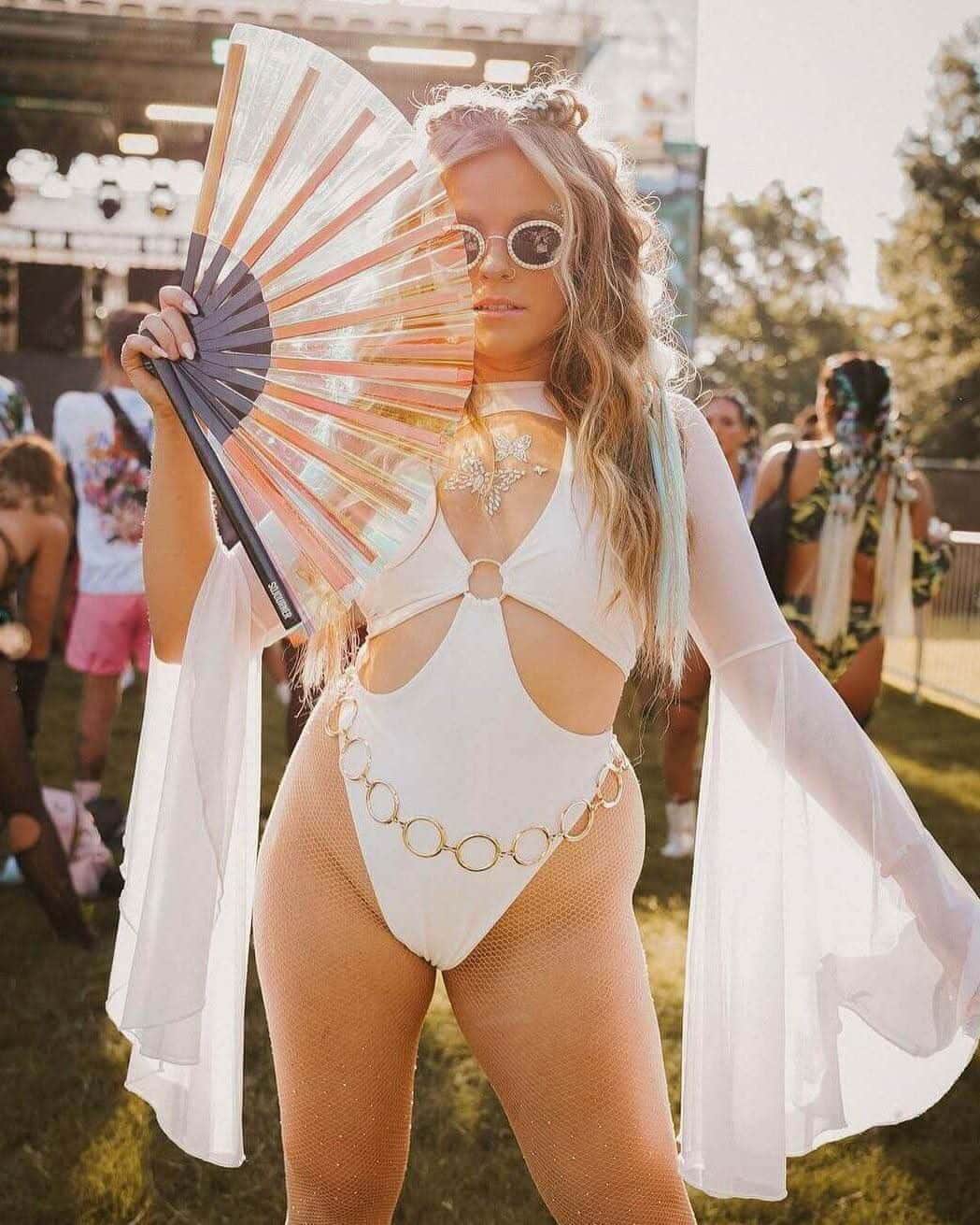
For daytime desert conditions, lighter colors and holographic finishes work harder than dark fabrics. They reflect rather than absorb sun energy, and holographic material shifts color with every movement under natural light — giving you visual complexity without adding a single extra piece. Pair with high-waisted shorts or matching bottoms and you have a look that holds its own from gates-open through golden hour.
Tier Two: The Transition
This is where day to night rave outfits separate from basic festival fashion. The transition tier goes on as the sun drops — roughly that 7-to-9 PM window where the temperature falls fastest and the stage production shifts from natural light to full laser and LED operation. The right transition piece changes the entire energy of your outfit while solving the temperature problem.
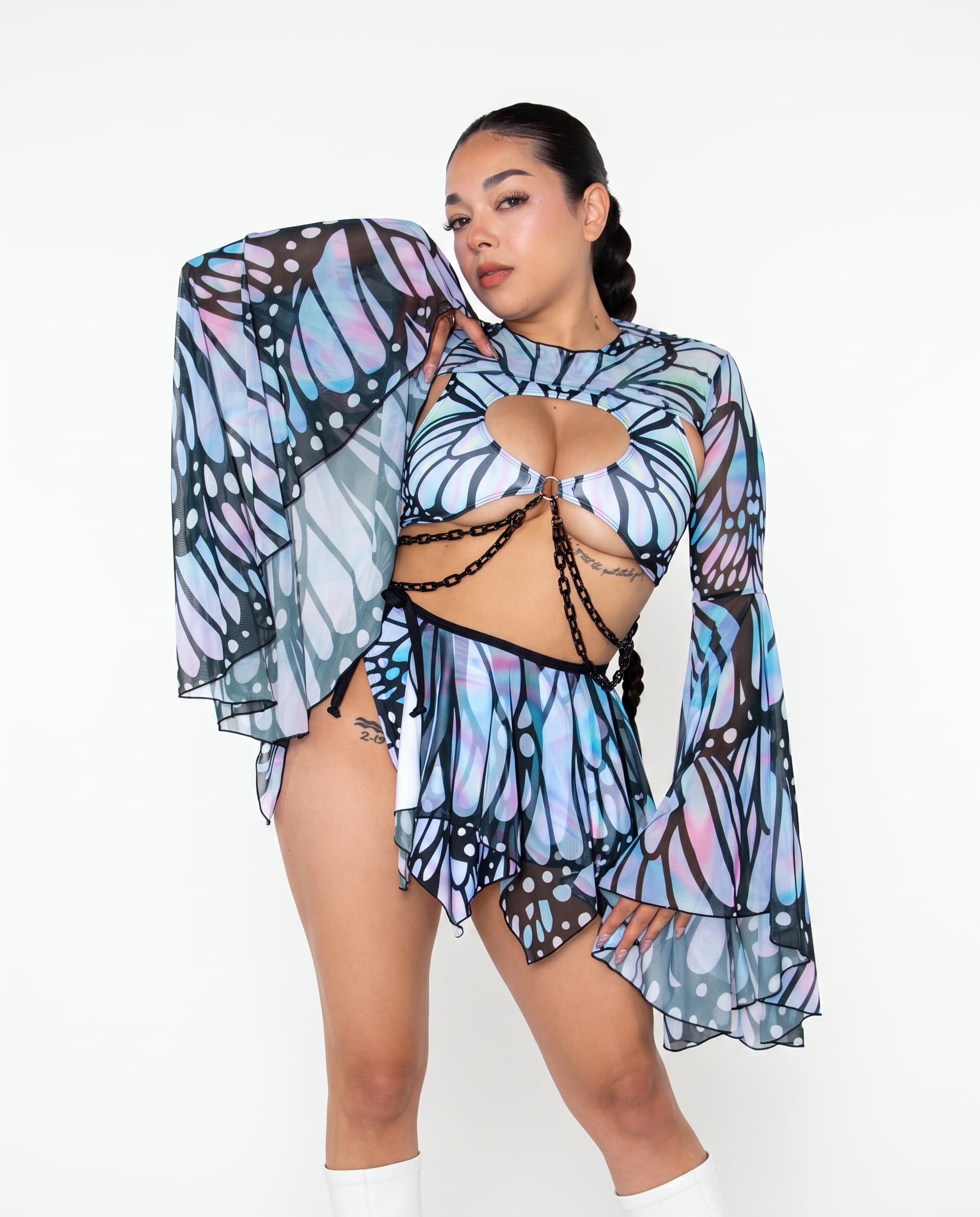
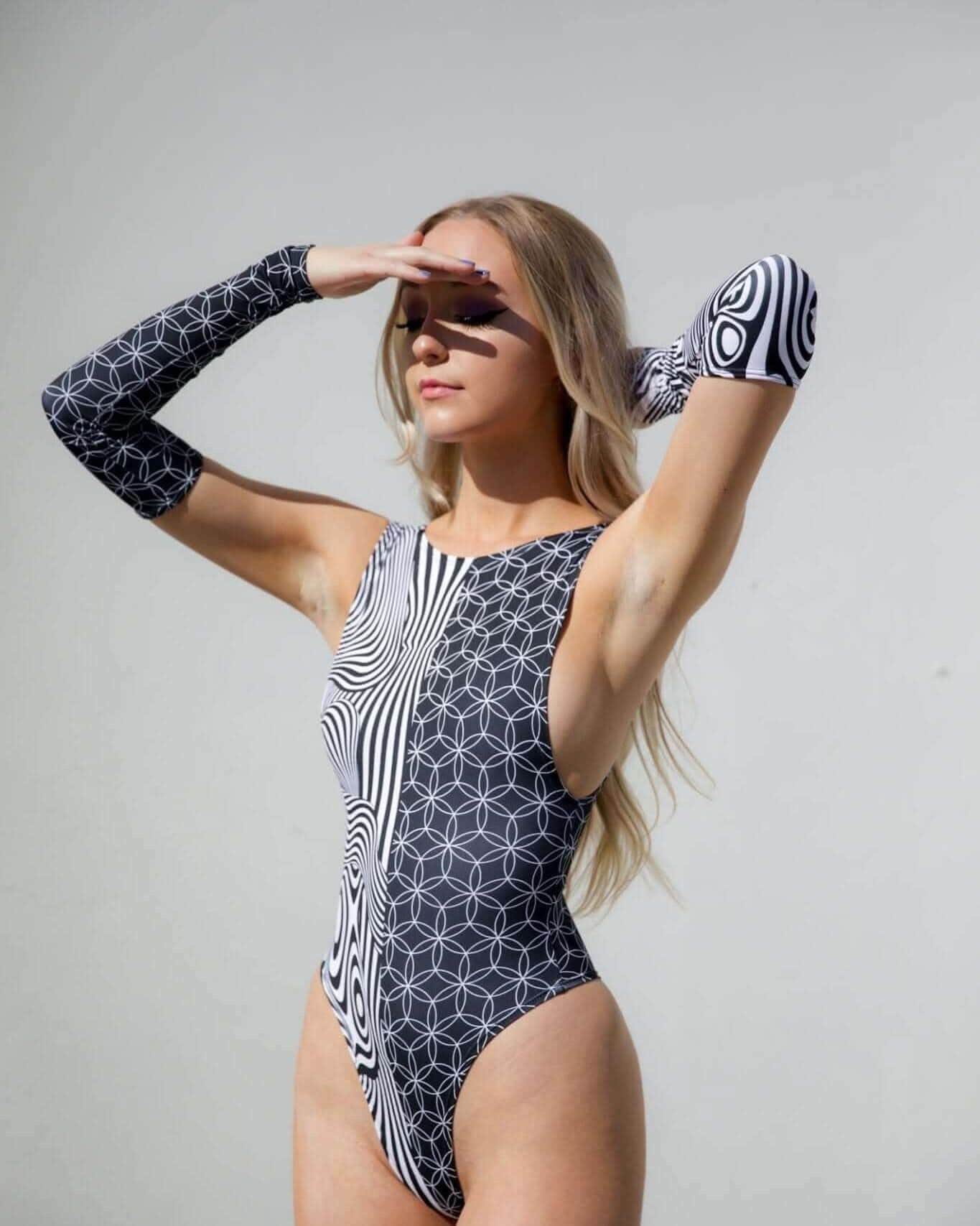
Mesh rave outfits and mesh overlays are the most effective transition pieces because they add coverage and warmth without trapping heat during the transition period when conditions are shifting but not yet cold. A printed mesh long-sleeve over a holographic bodysuit transforms the silhouette completely. What read as a minimal daytime look becomes a layered, textured night look — and you are warmer without a heavy jacket killing your range of motion on the dance floor.
Kimonos and sheer overlays serve the same function with a different aesthetic. A flowing kimono adds movement and drama that flat layers cannot match, catching stage lights and creating visual interest from every angle. The key criteria: your transition piece must complement your base layer in color story and energy, not just cover it up.
Tier Three: The Night Build
By 10 PM at a desert festival, the temperature has dropped 25 to 30 degrees from the afternoon peak. Your base and transition layers are working, but you need the final build to lock in warmth through the coldest hours — typically 2 AM to sunrise. This is where arm sleeves become the most underrated piece in your entire festival wardrobe.
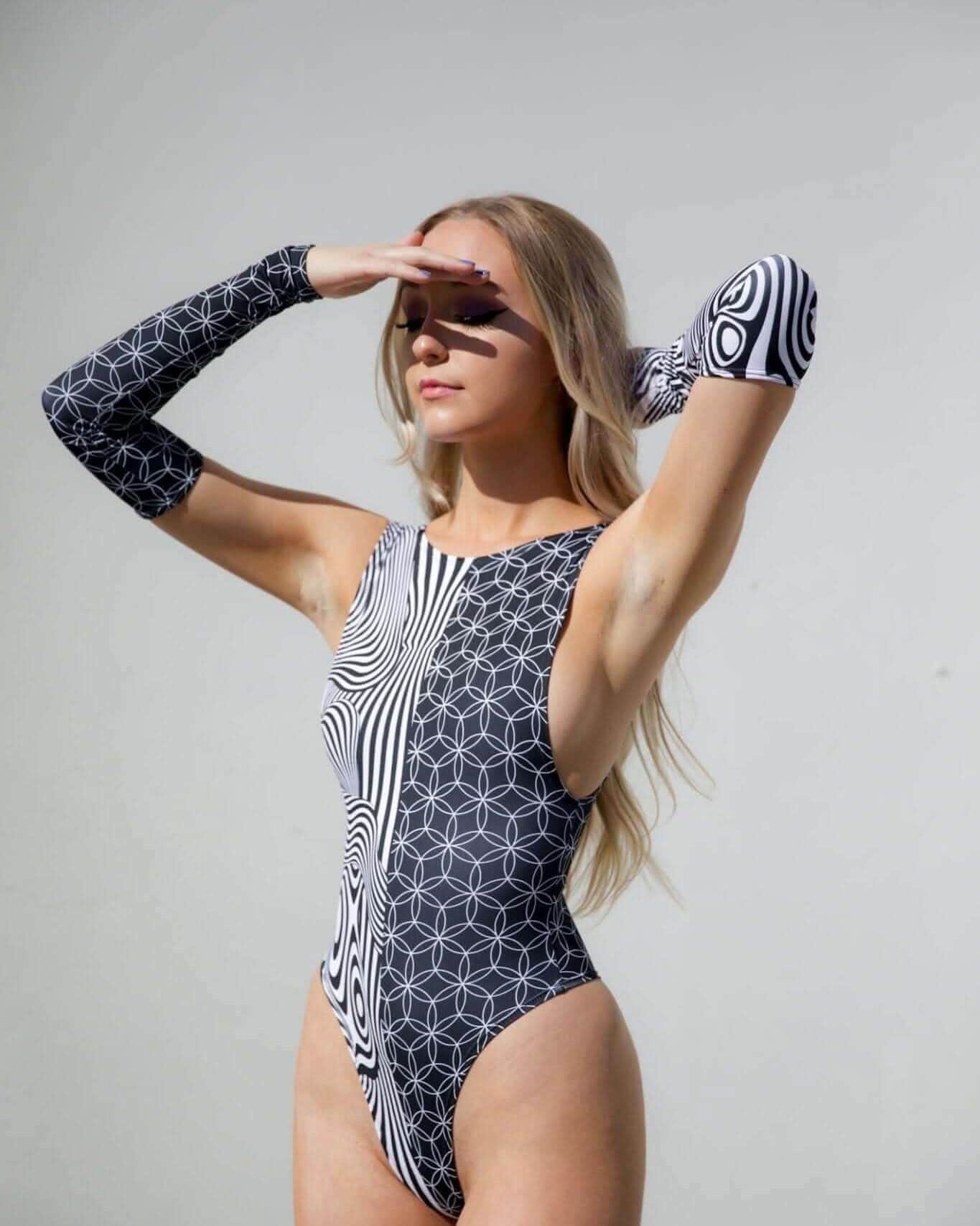
Arm sleeves add targeted warmth to the area you feel the cold most — your arms and shoulders — without adding bulk over your core outfit. Because your torso is generating heat from dancing, the core stays warm longer than your extremities. Sleeves address the actual problem rather than burying your entire look under a hoodie. UV-reactive arm sleeves do double duty: warmth for your body, and a glow-up for your outfit under the blacklights that dominate late-night production.
This is the moment your outfit peaks. Base layer, mesh or kimono overlay, arm sleeves catching UV — every tier visible, every piece contributing to both warmth and aesthetics. You went from a clean, minimal daytime look to a fully built nighttime statement without changing a single item. One wardrobe, two vibes, zero trips to the locker.
Choosing Fabrics That Work Across the Full Range
The layer system only works if each piece is made from fabric that performs across conditions. Cotton looks fine in a dressing room but absorbs sweat during the day, gets heavy, and turns cold against your skin the moment temperatures drop. Fast fashion polyester traps heat when it is warm and offers nothing when it is cool. The fabrics that actually work for festival outfit change ideas are the ones engineered for performance across a range.
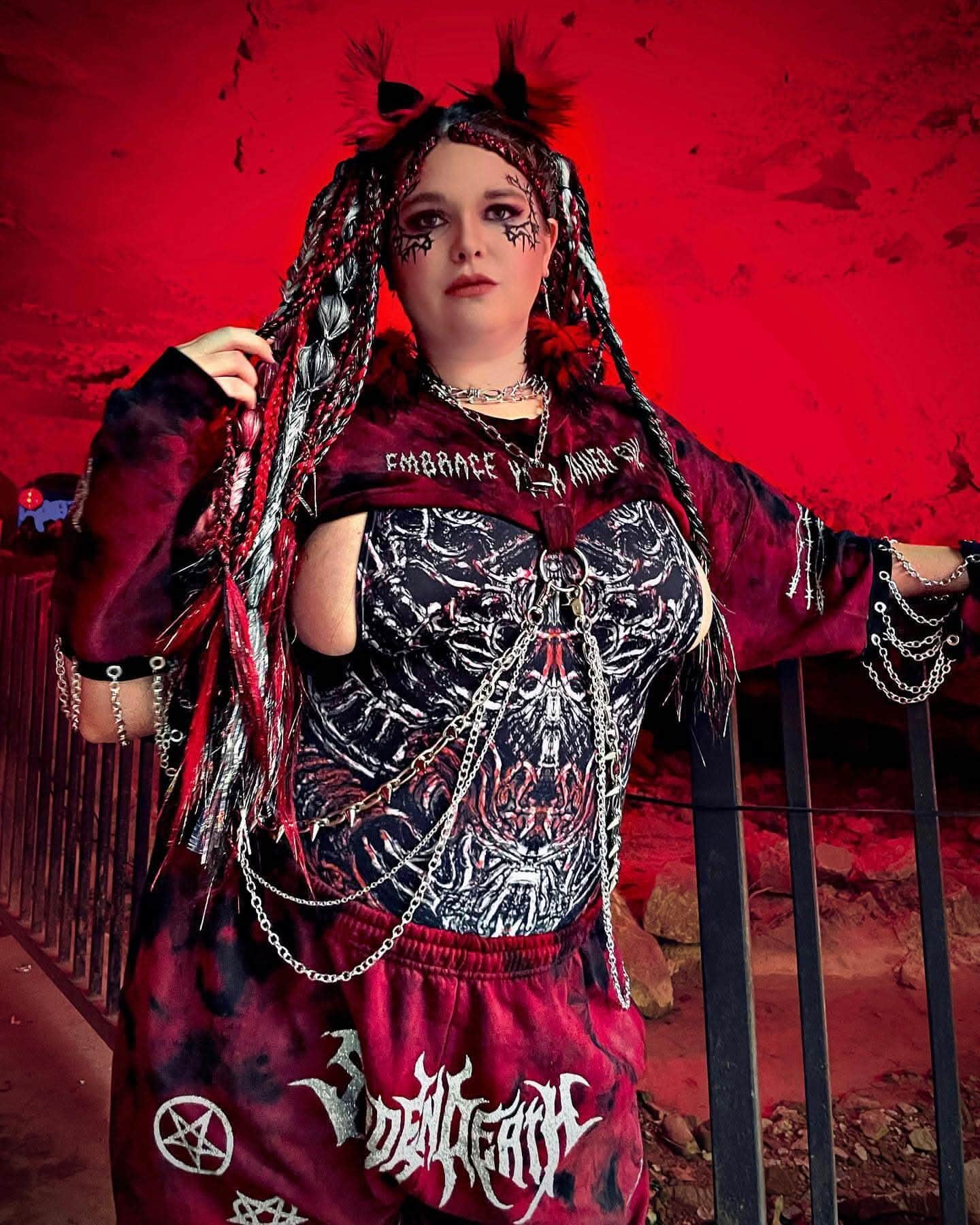
Four-way stretch materials that wick moisture handle the daytime equation — pulling sweat away from your body and drying fast so you are never sitting in damp fabric as the temperature shifts. These same fabrics retain enough body heat to contribute to warmth when layered, without the cold-when-wet problem that ruins cotton at night. Freedom Rave Wear builds every piece from recycled PET polyester with exactly these properties — handcrafted in San Diego with the understanding that festival conditions are not a dressing room mirror.
For your transition and night layers, mesh is the material of the season because it offers variable warmth. A single mesh layer barely insulates — perfect for the transition period. Doubled or layered mesh starts to trap air and body heat, adding meaningful warmth without weight. This means the same mesh piece performs differently depending on how it sits against your other layers, giving you finer temperature control than a binary jacket-on-or-jacket-off approach.
Color and Finish Strategy for Day Versus Night
The visual shift from day to night at a festival is as dramatic as the temperature change. Daytime is natural sunlight, warm tones, open sky. Nighttime is UV floods, lasers, LEDs, and strobes in a completely different color spectrum. A smart color strategy means your outfit looks intentional in both environments rather than optimized for one and accidental in the other.
Daytime Winners
Holographic rave outfits are the strongest daytime performers because they use natural sunlight as their light source. Under direct sun, holographic fabric runs through its full spectrum with every movement — no stage production required. Pastel holographics read as fresh and modern during the day. Silver and iridescent holographics throw light in every direction, creating the kind of visual that earns compliments from strangers and camera attention from photographers.
Light-toned pieces reflect heat rather than absorbing it, keeping you physically cooler. White, silver, lavender, and light pink are not just aesthetic choices in 100-degree heat — they are functional ones. Your daytime rave outfit can be both a visual statement and a practical survival tool.
Nighttime Transformation
UV-reactive fabrics are the night shift of the same wardrobe. Under blacklights, vivid greens, electric purples, and hot pinks transform from bold color choices into glowing, luminous statements that look completely different from their daytime versions. If your arm sleeves or mesh overlay are UV-reactive, adding them at night does not just add warmth — it fundamentally changes what your outfit looks like under stage production.
This is the practical magic of the layer system combined with a color strategy. Your daytime holographic base reads clean and sun-drenched. Your nighttime additions — UV-reactive sleeves, a neon mesh overlay — shift the palette into something that glows and moves with the production. Same person, same base outfit, entirely different visual energy. That is what night festival outfit ideas look like when they are planned rather than improvised.
Festival-Specific Game Plans
The strategy adapts to the specific festival. Each event has its own temperature profile, production style, and timeline that should inform exactly how you build your day-to-night transition.

EDC Las Vegas
EDC runs dusk to dawn — roughly 7 PM to 5:30 AM — so you skip the extreme daytime heat entirely but face a long, slow cool-down through the night. Start with a mid-weight base that handles the warm early hours. Add your transition layer around 11 PM when the desert cools noticeably. Build to full layers by 2 AM. EDC's production is UV-heavy, so anything blacklight-reactive will earn its keep across all eight stages.
Coachella
Coachella spans the full day-to-night arc. Gates open in the early afternoon when temperatures are still climbing toward their peak. You will spend hours in direct desert sun before the headliners take the main stage after dark. Start with your lightest, most breathable base. Keep your transition layer tied at the waist or in a small bag. Add it at golden hour. By the time the headliner closes the night, you will want your full build for the walk back across the polo fields.
Beyond Wonderland and Inland SoCal Events
Inland Southern California events deal with a sharp marine layer transition. Daytime can be warm and dry, then a wall of cool, damp air rolls in after sundown. The humidity change means your layers need to handle moisture as well as temperature. Quick-dry fabrics and mesh outperform cotton and heavy synthetics. Rave accessories like chain harnesses add edge to your night build without adding insulation you do not need in humid conditions.
The Accessories That Make It Work
Accessories are the finishing layer that ties day-to-night transitions together. The right accessories do not just decorate — they contribute functionally to each tier of your outfit and create visual continuity across the transformation.
Sunglasses anchor your daytime look. Statement frames with tinted lenses serve double duty as sun protection and style. They come off at night, which is itself a visual shift — the face you have been hiding behind shades all day is suddenly part of the outfit. A pair of clear or lightly tinted glasses can replace them for the night build if you want to maintain that frame element under stage lights.
Body chains, harnesses, and layered necklaces add dimension that reads differently under daylight versus stage production. A chain that catches sunlight during the day catches lasers at night. These pieces bridge your day and night looks because they stay constant while everything around them shifts. They are the thread of visual continuity that makes your two-vibe wardrobe feel like one intentional arc.
The key with accessories: choose pieces that earn their place in both lighting environments. Anything that only works in one — sunglasses that are too dark for night, glow accessories that look dormant during the day — either needs to be swapped (adding to your carry load) or accepted as a single-context piece. The best summer rave outfits follow this same principle of dual-context accessories, and it applies equally to the day-to-night festival challenge.
Building Your Day-to-Night Kit
Putting this all together, here is the practical checklist for a day to night festival outfits wardrobe that covers the full temperature and production range of a desert festival weekend.
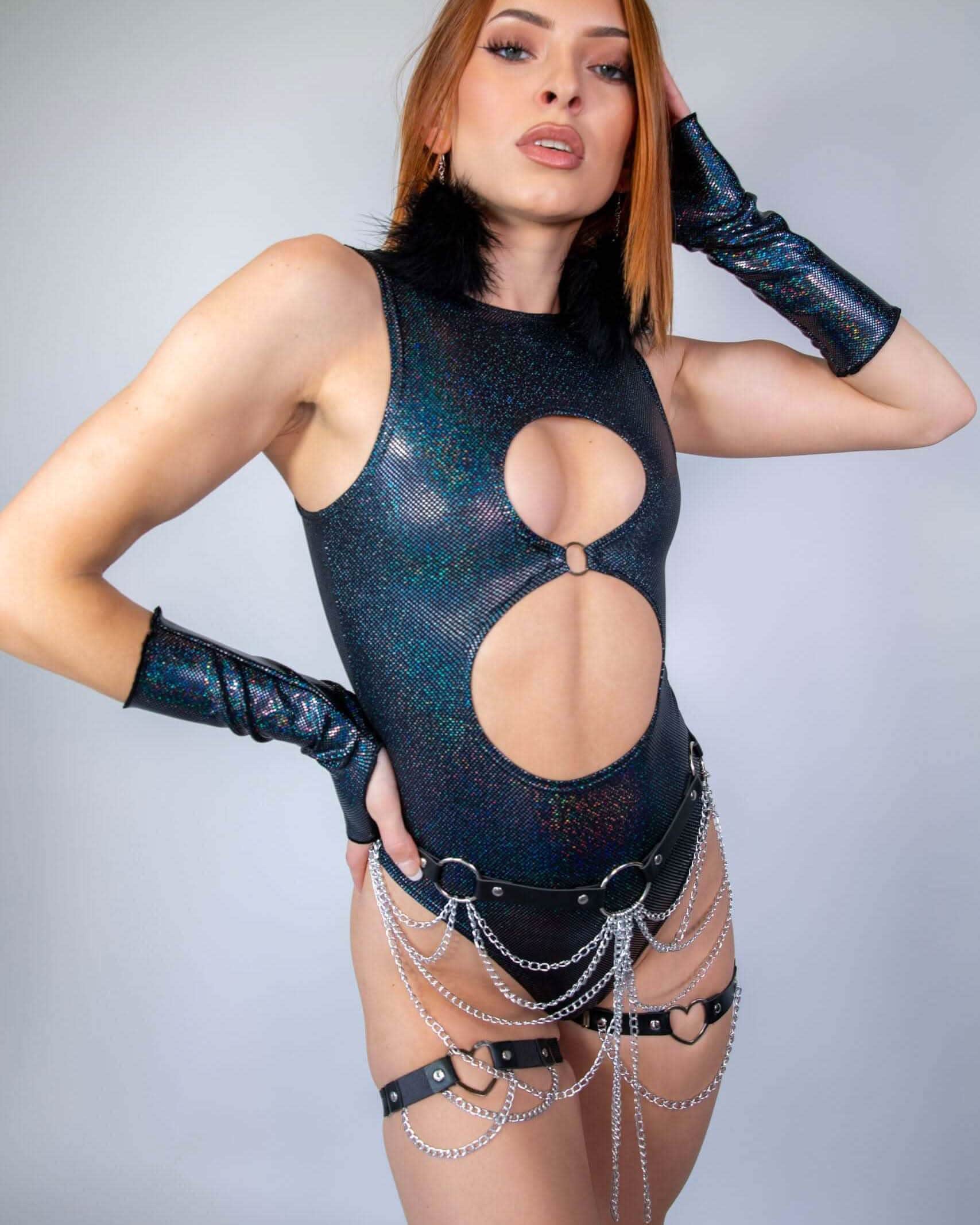
- Base layer: One bodysuit or bralette-and-bottoms combination in a lighter or holographic finish for daytime performance
- Transition layer: One mesh long-sleeve, kimono, or sheer overlay that changes your silhouette and adds light warmth
- Night build: UV-reactive or bold-colored arm sleeves that add targeted warmth and glow under blacklights
- Bottoms: High-waisted shorts or matching set bottoms in a quick-dry, four-way stretch fabric
- Accessories: One set that works across both lighting environments — chains, harnesses, or metallic pieces
- Footwear: Broken-in platform sneakers with real cushioning for 20,000+ steps across both conditions
Every piece on this list earns its spot by working across multiple tiers and conditions. Nothing is dead weight. Nothing requires a locker trip or a return to camp. The entire transformation happens on your body, in real time, as the festival shifts around you.
This is where quality separates itself from fast fashion in the most practical way possible. Pieces built from recycled materials with four-way stretch, reinforced seams, and a lifetime warranty handle 14-hour festival days across a 35-degree temperature range. Pieces built for a single Instagram photo do not survive the first layer change. Every piece from Freedom Rave Wear is handcrafted in San Diego with exactly this kind of endurance in mind — because the team that makes them has stood in those same temperature swings at those same festivals.
Your outfit is not just what you wear to a festival. It is how you experience the festival — from the first set under blazing sun to the last beat before sunrise. Build it as a system, choose pieces that transform with the conditions, and you will never have to choose between looking fire and staying comfortable. One wardrobe. Two vibes. Every hour covered.