Clothes glow under blacklight when their dyes, pigments or finishes fluoresce under ultraviolet light. Look for an explicit UV-reactive or blacklight-reactive description, then check the exact colorway. Some fluorescent neon fabrics and some white fabrics glow strongly, but a bright daytime color, shiny finish or white label alone cannot tell you how a garment will look under a venue's lights.
If you're planning a neon party fit, the useful question is not just which color to wear. It's which part of your outfit should light up, what evidence you have for that fabric, and whether you still love the look when the blacklights are off. Here's how to make that call before the festival.
What makes clothing glow under blacklight?
Fluorescent substances absorb light and emit visible light. The effect depends on the substance, so two pink fabrics can look similar in daylight and react differently under a blacklight. The American Association of Textile Chemists and Colorists explains optical brighteners in textiles, including how they absorb ultraviolet light and emit visible light.
That is why white clothing sometimes has a blue-white glow: optical brighteners can contribute to the effect. It does not mean every white garment has the same finish or brightness. Likewise, polyester, nylon and cotton are fiber names, not promises that an item will glow. Check the actual garment rather than buying from fiber content alone.
Which clothes and colors should you check first?
Use color to build a shortlist, then use the product information to make your decision. This table separates a useful starting point from a guarantee.
| What you're considering | What to look for | What to avoid assuming |
|---|---|---|
| Neon yellow, green, pink or orange | An explicit fluorescent or UV-reactive claim for that colorway | Every neon shade glows equally |
| White clothing | A blacklight photo or a check of the exact fabric | White always glows, or always glows blue |
| A printed garment | Which colors or sections react | The whole print lights up because one detail does |
| Holographic, metallic or reflective fabric | A separate UV-reactive description | Shimmer or reflection proves fluorescence |
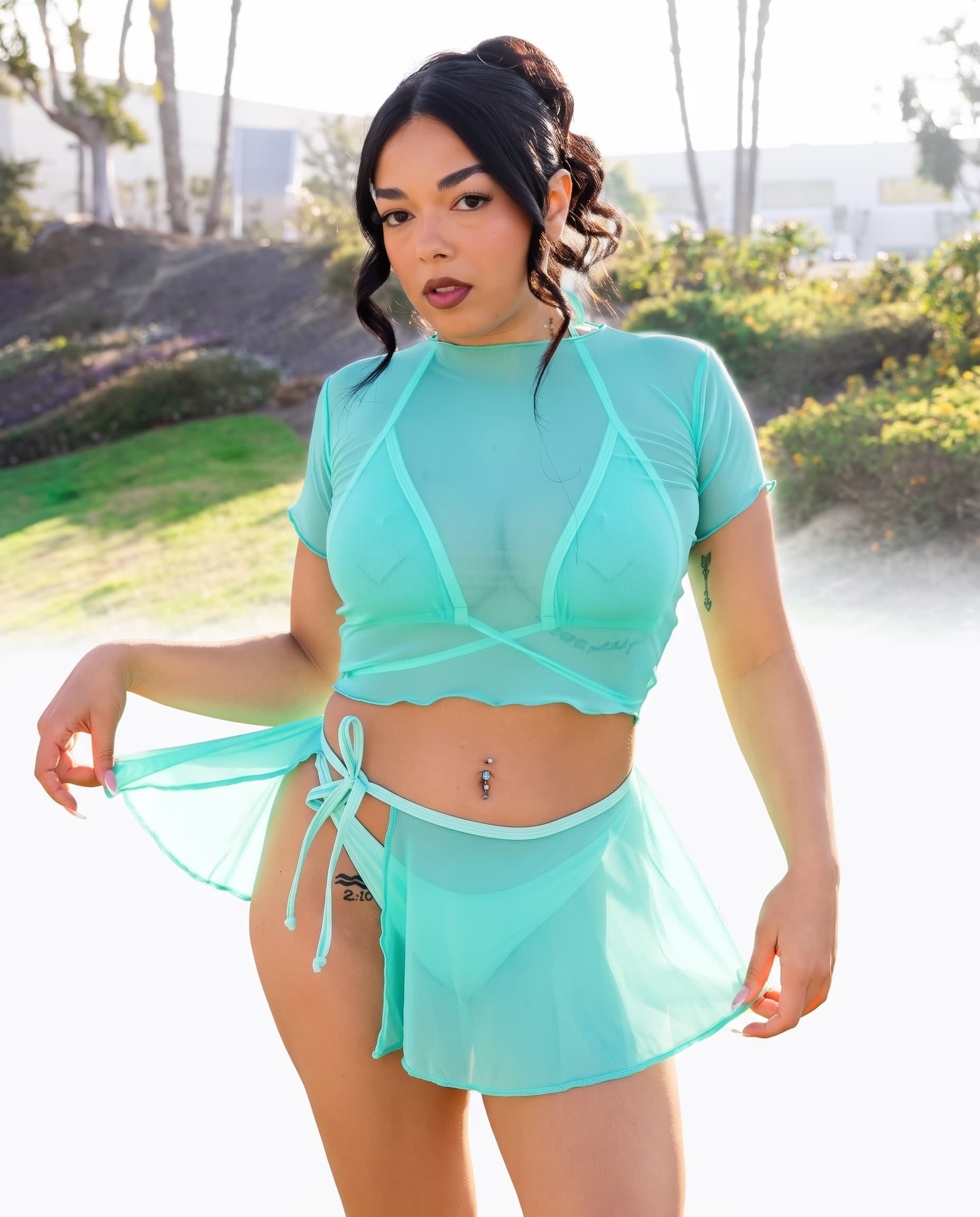
| Mesh or a sheer layer | The response of the mesh, plus the look over your chosen base | All mesh behaves the same way |
Dark fabric can also be part of the look without being the glowing element. A black base gives you somewhere to place a reactive skirt, sleeve or print detail. You do not have to make every piece compete for attention.
UV-reactive, glow-in-the-dark and reflective are different effects
For a blacklight party, UV-reactive usually describes fluorescence while the light is present. Glow-in-the-dark products can instead use phosphorescent materials that continue emitting light after the source is removed. The American Chemical Society describes the difference between fluorescence and phosphorescence.
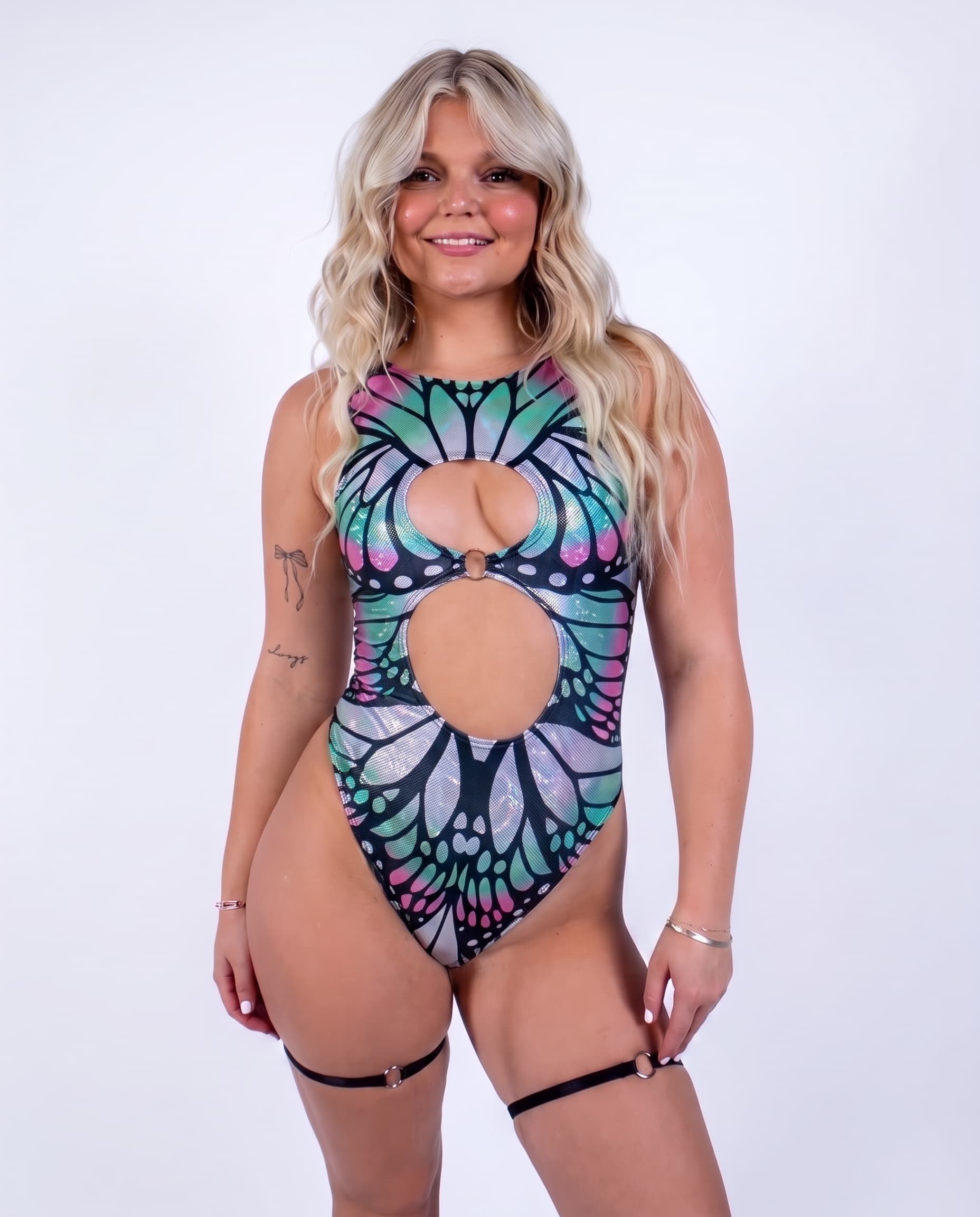
Reflective trim sends light back toward its source, while holographic finishes create an appearance that changes with viewing angle and lighting. Neither label, by itself, tells you that the item fluoresces. If you're expecting an afterglow when you leave a UV-lit room, ask for a glow-in-the-dark specification rather than treating the terms as interchangeable.
How to tell if your clothes will glow in blacklight
- Check the exact product and colorway. Look for UV-reactive or blacklight-reactive wording. A collection name is less specific than a statement about the item you're buying.
- Separate daylight photos from lighting proof. A vivid photo shows the color and shape. Ask whether a second image actually shows the same garment under a blacklight.
- Try the garment under a suitable blacklight. Follow the lamp manufacturer's instructions. Compare the fabric with the lamp on and off, keeping the setup consistent.
- Check the whole outfit. Look at the main fabric, seams, elastic, printed areas and anything layered over it. The effect may be concentrated in one part of the garment.
- Keep the venue in mind. A home check is a useful reference, not a promise of identical brightness under every stage setup. Plan an outfit you enjoy in ordinary light too.
If you cannot test before ordering, ask a specific question: “Does this exact colorway react under blacklight, and do you have a photo of it under that lighting?” That gets you closer to a useful answer than asking whether a piece is bright or festival-ready.
Two ways to build the look with FRW pieces
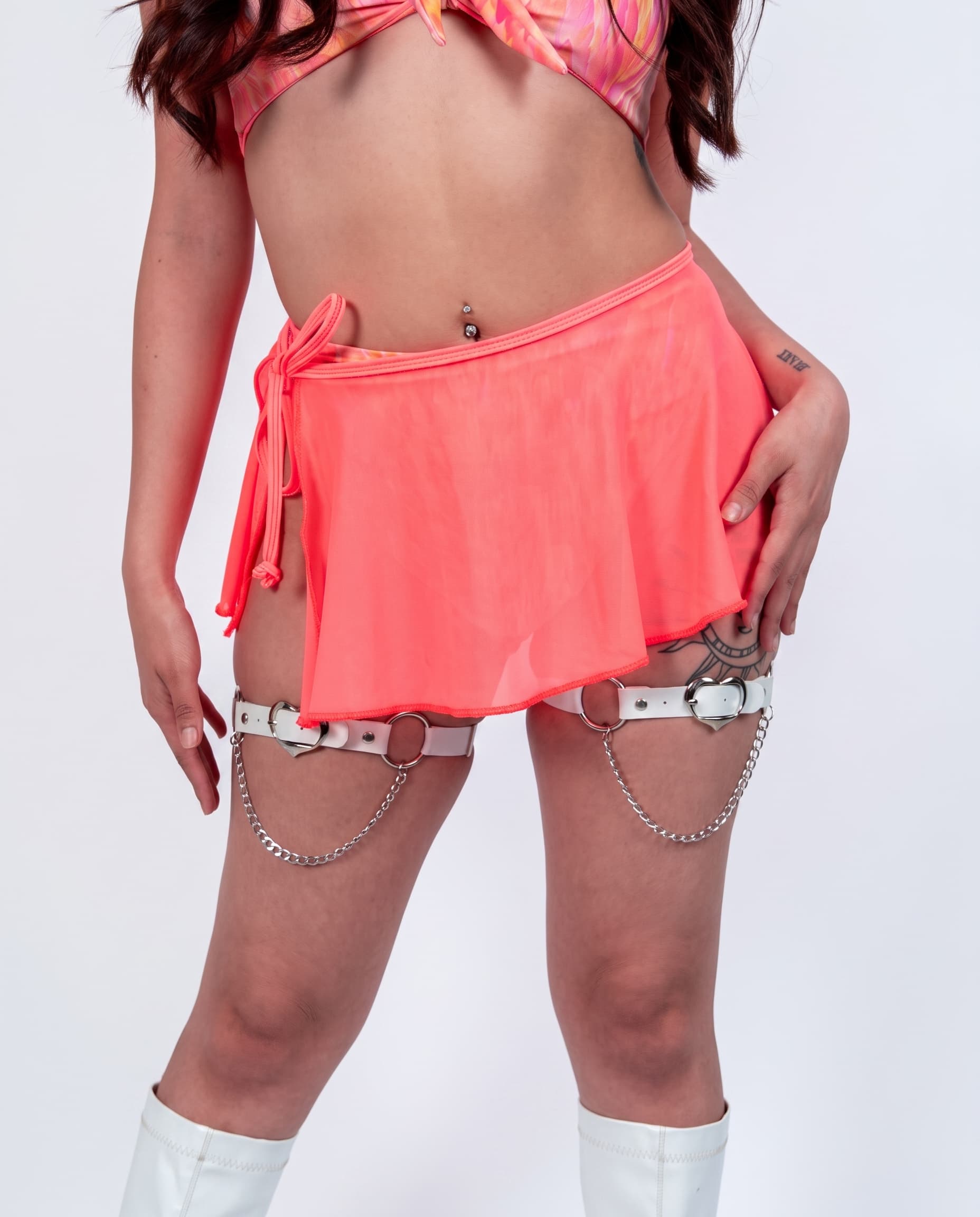
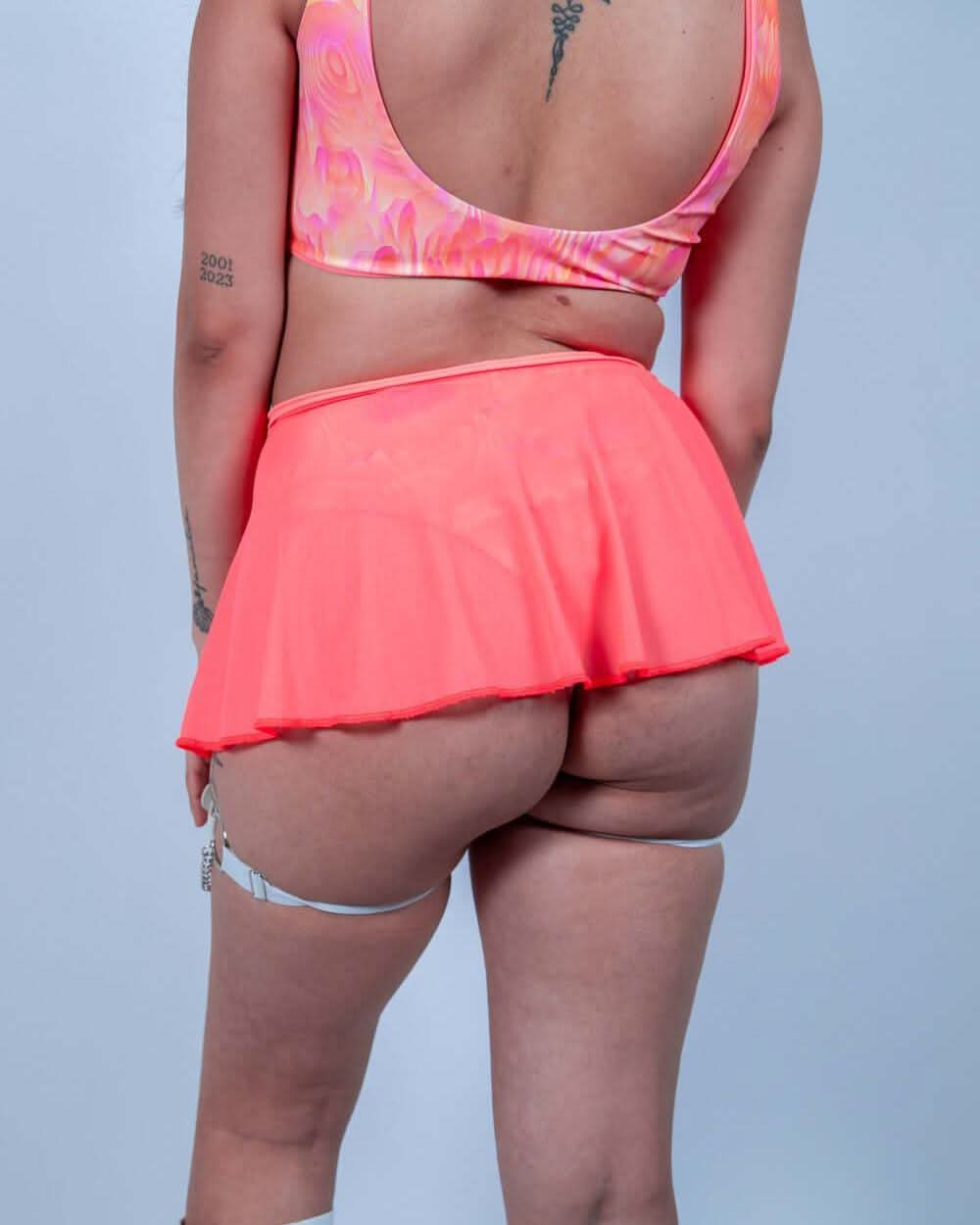
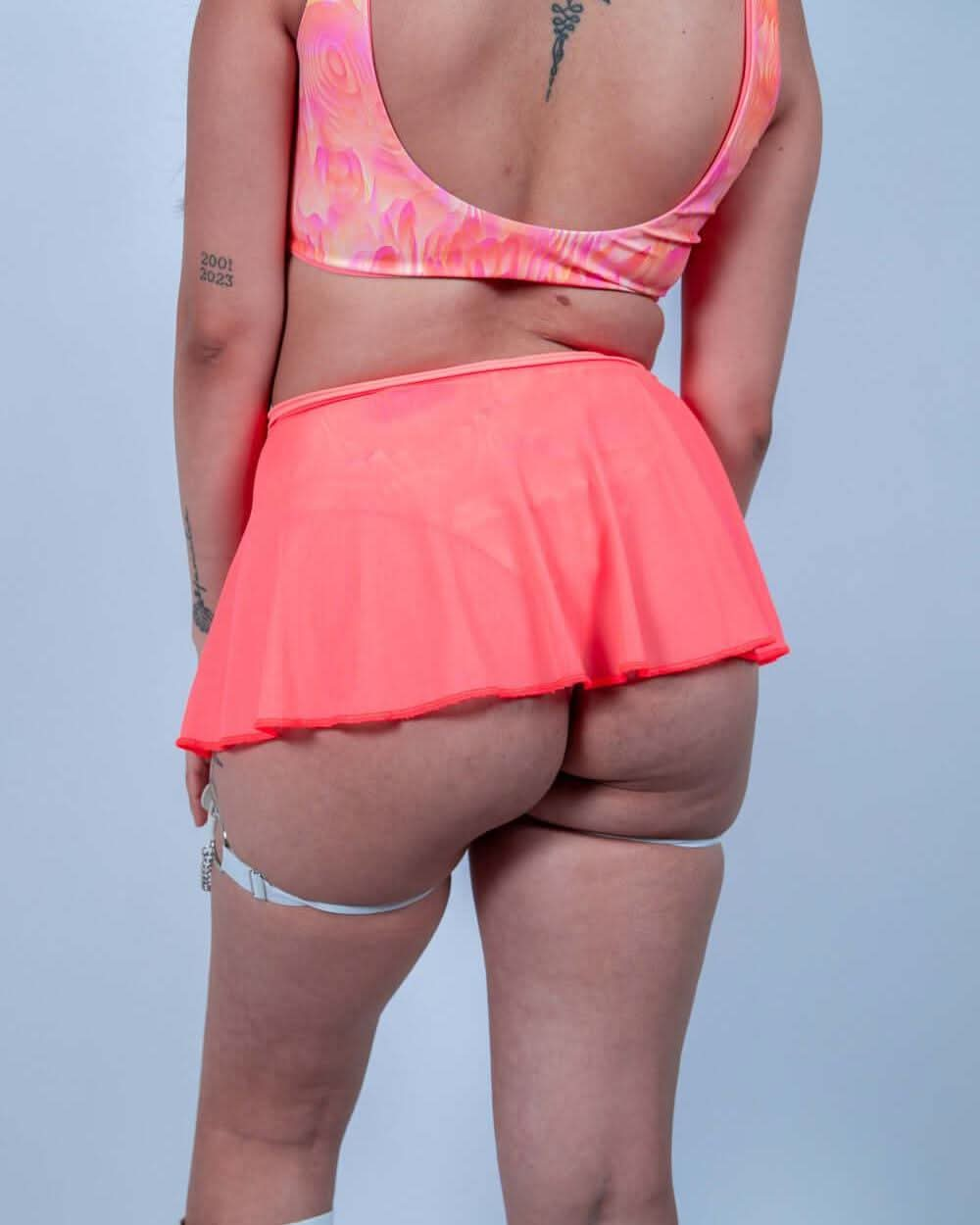
The Neon Coral Mesh Swirl Skirt is described in our product information as glowing under blacklights. Its coral mesh gives you a single-color layer to build around. Choose your base for the coverage you want, then check both pieces together rather than expecting the layer underneath to react too.
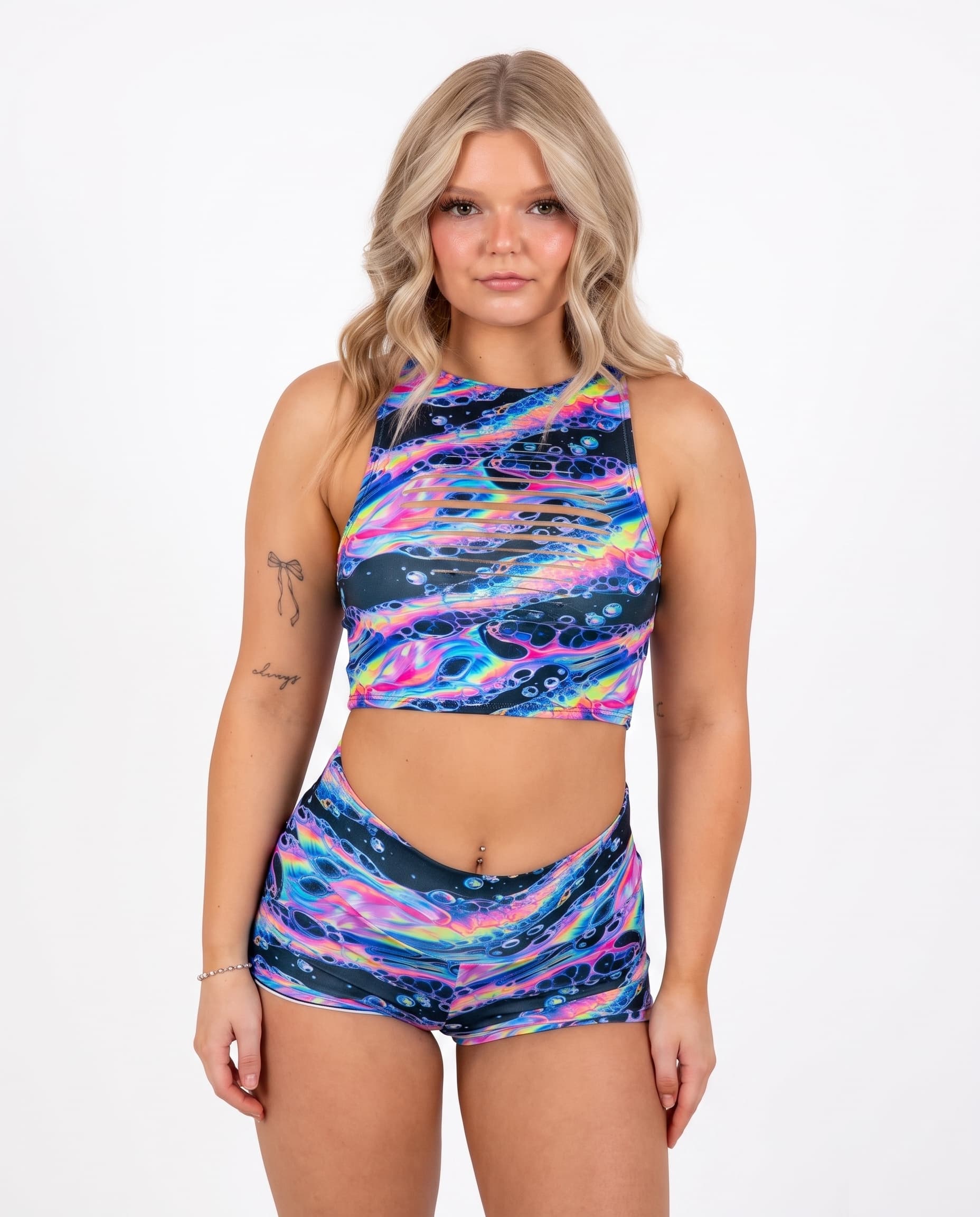
For a printed top, the Acid Sky Slit Crop Top combines a high neckline and cropped shape with horizontal front slits. Our product information describes the Acid Sky print as glowing under blacklights. Use the photograph to judge the cutout placement and motif scale, then check the exact garment under your lighting rather than using an ordinary product image to estimate brightness.
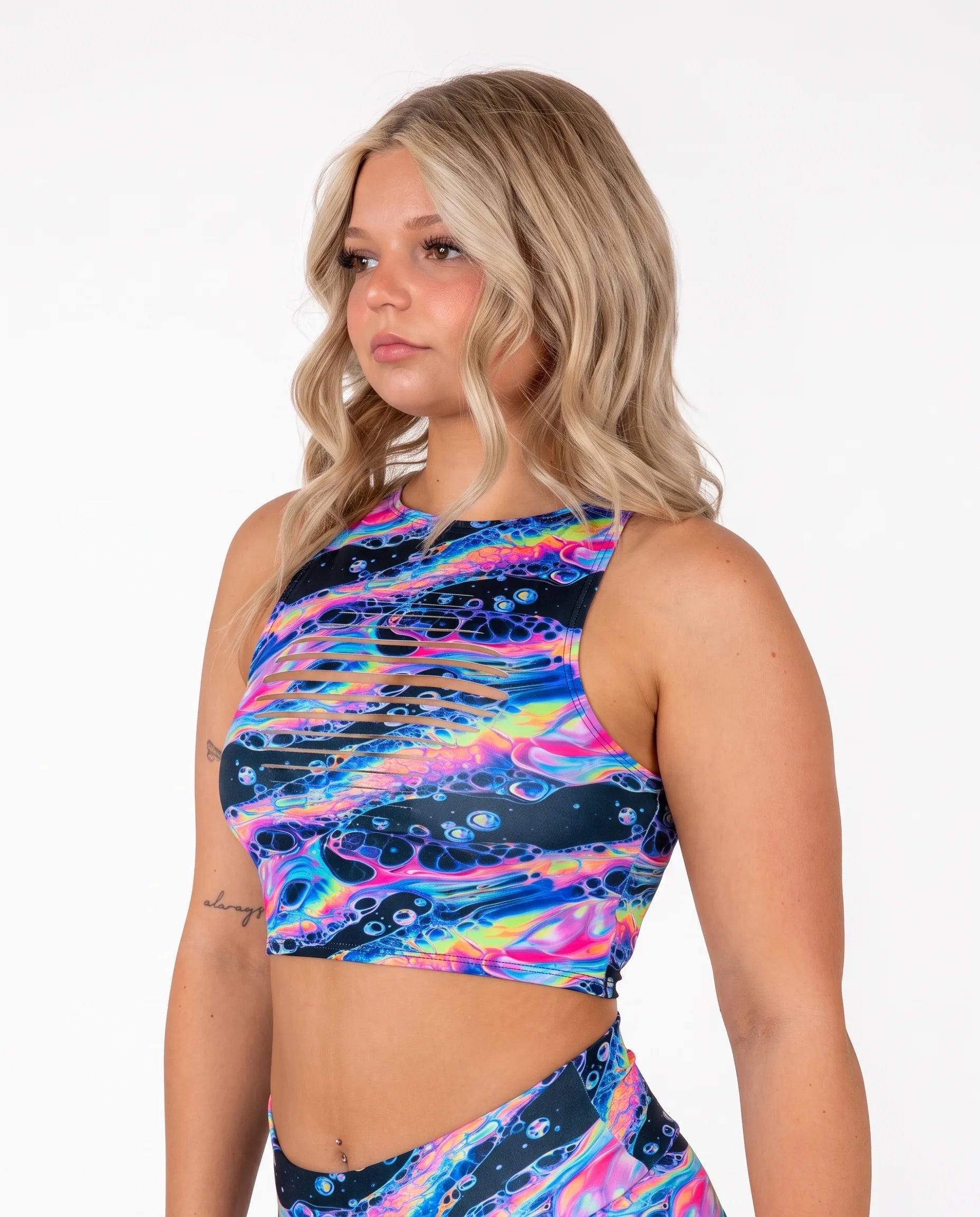
The skirt is a sheer mesh layer; the cropped top has openings across the front. Check the size guidance and coverage on the individual product page, then sit, walk and dance in your planned combination. For more help comparing motifs and scale, use our guide to choosing a psychedelic festival print.
A quick outfit worksheet before you buy
Write down four things: the piece you want to react, the evidence for that exact fabric, the base layer you will wear with it, and how the outfit works without blacklight. If one of those answers is missing, resolve it before adding more accessories. One well-chosen focal piece is easier to coordinate than several items bought on color alone.
For repeat wear, follow each garment's care label. Mesh, trims and printed fabrics can need different handling. Do not add bleach, brighteners or other treatments just to chase a stronger glow unless the garment's instructions allow them. For a wider starting point, browse UV-reactive clothing and check the details on each piece.
FAQ
Do all neon clothes glow under blacklight?
No. A bright daytime color does not establish fluorescence. Look for an explicit UV-reactive claim for the exact colorway, a blacklight photograph, or a check of the actual garment.
Will white clothes glow under blacklight?
Some white fabrics glow because of optical brighteners, but the effect varies. Test the exact garment rather than assuming every white fabric will look equally bright.
Does UV-reactive clothing glow in complete darkness?
Fluorescent clothing needs a suitable light source for that effect. A UV-reactive label does not promise an afterglow once the blacklight is switched off.
Can a blacklight product photograph prove how bright my outfit will look?
It can show a reaction under the photographed conditions, but it cannot guarantee identical brightness at your event. Check the exact colorway and distinguish blacklight photographs from ordinary product photographs.