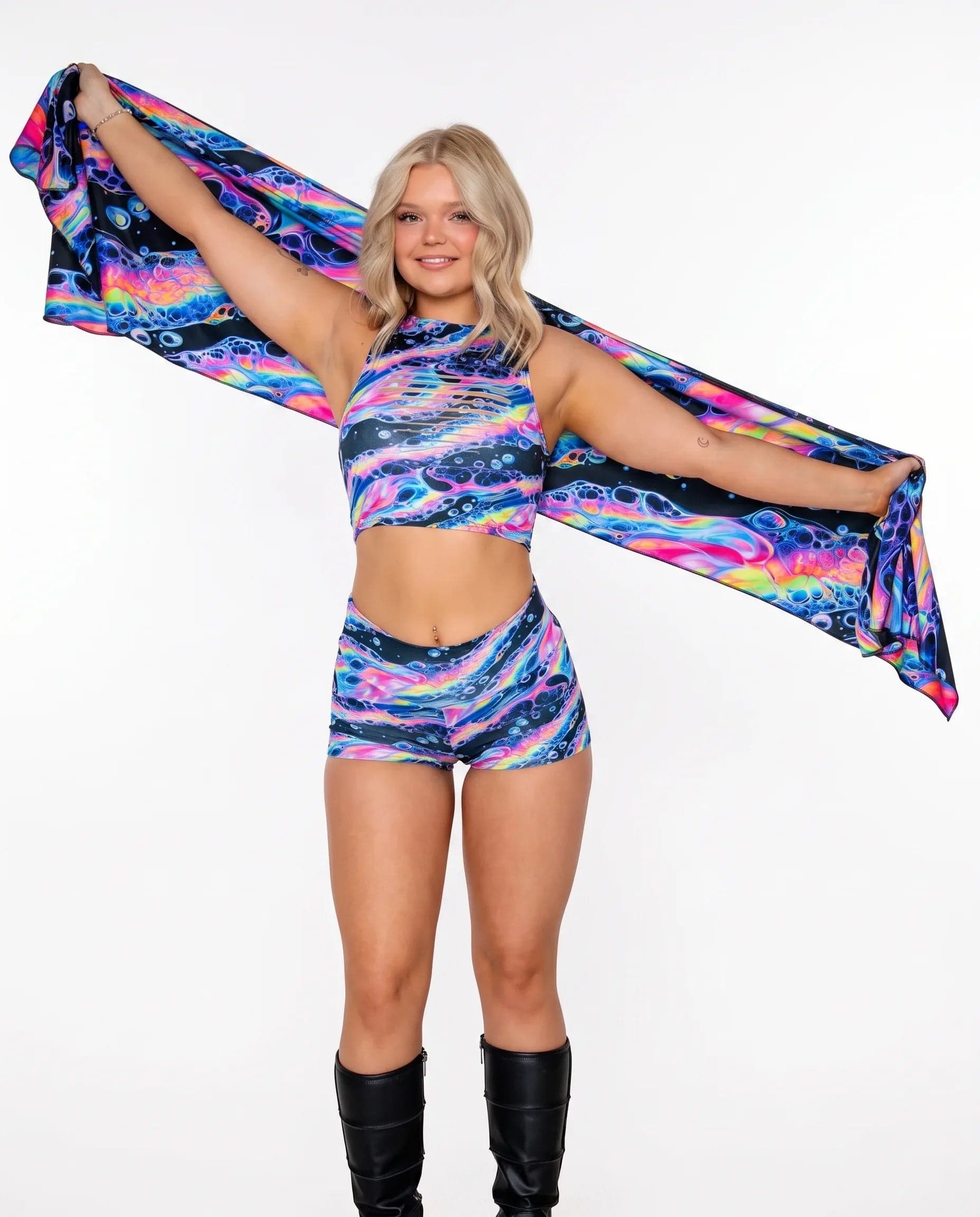
Choose a rave scarf or pashmina by checking the actual fabric, dimensions and construction, then match those details to the way you want to wear it. Finding a print you are obsessed with is the fun part. This is the practical bit that helps you pick a piece for your own festival day, rave fam.
Start with what the name tells you
A scarf describes an accessory you can drape, wrap or tie. Pashmina has a more specific textile meaning: the Wildlife Institute of India's Pashmina Certification Centre describes pashmina or cashmere as the fine winter undercoat of mountain goats. That fiber and its associated craft deserve more than being treated as a generic name for any patterned wrap.
Festival shopping language can be broader. Someone looking for a rave pashmina may be picturing an oversized printed accessory, without having a particular fiber in mind. That is a useful starting point for a search, but it leaves the buying decision unfinished. Check the composition of the piece in front of you. A product made from another fabric should be described by its own material, rather than assumed to be cashmere because it appears in a pashmina search.
Our festival scarf collection is the shopping starting point. This guide helps you read the differences between pieces; our scarf styling guide is where to go when you want ideas for wearing the one you choose.
Compare the piece, not two shopping labels
Put two actual listings side by side. You are choosing the fabric, size and finish that work for you, so give those details the same attention as the pattern. Keep the answers below together as you compare, especially when a print is making a very persuasive case for coming home with you.
| Check | What to look for | The decision it helps you make |
|---|---|---|
| Fabric | The stated fiber composition and the garment's label. | Whether the material matches what you intended to buy. |
| Dimensions | Length and width, with the units stated. | Whether there is enough fabric for your preferred drape or tie. |
| Stretch and construction | Product-specific stretch notes, close photographs and construction details. | How to judge a wrap or knot without assuming every piece behaves alike. |
| Edges | A close view of the hem, fringe or other finish. | Whether that finish works with the way you plan to wear and carry it. |
| Care | The care instructions for that exact fabric and piece. | How the scarf fits into your routine after the festival. |
| A full view, a detail view and photographs of the piece being worn. | How the pattern reads across the whole accessory and with your clothes. |
If an answer is missing, ask before ordering. A model photograph cannot give you an exact width, and “one size” is not a measurement. Keep an unknown detail in your questions for the shop until you have an answer you can use.
Choose around the way you will use it
Think through a few ordinary moments from your day: arriving at the venue, dancing, taking a break and packing up to leave. Which use matters most? A scarf you want to drape over your shoulders asks a different sizing question from one you mainly want to tie at your waist. Start with that choice and build the rest of your plan around it.
For a shoulder wrap, compare the listed width with a scarf you already own and like. For tying, check how much length you need after allowing room for a comfortable knot. For carrying it between uses, consider where it will go in your bag. Without a stated weight or packed measurement, the listing does not establish how small it will pack.
A scarf can also be something to sit on during a permitted break. Choose a place where sitting is allowed, keep paths clear and decide whether you are comfortable putting that particular fabric on the ground. Follow the event's rules and the piece's care instructions. You may prefer to keep a delicate accessory for wearing and use something else underneath you.
For changing weather, check the forecast and plan your layers around the conditions you expect. Look for item-specific evidence of any temperature, sun-protection or cooling claim you need to rely on. Choose the scarf for uses its actual fabric and construction support, and let your other layers cover the rest of the plan.
Read graphic scarves at two scales
Look at the entire scarf first. Then look closely at a smaller section. The full view helps you see where the main colors and shapes sit; the detail view helps you inspect the smaller elements and the edge finish. A print can feel very different folded into a narrow neck wrap than it does opened across your shoulders.
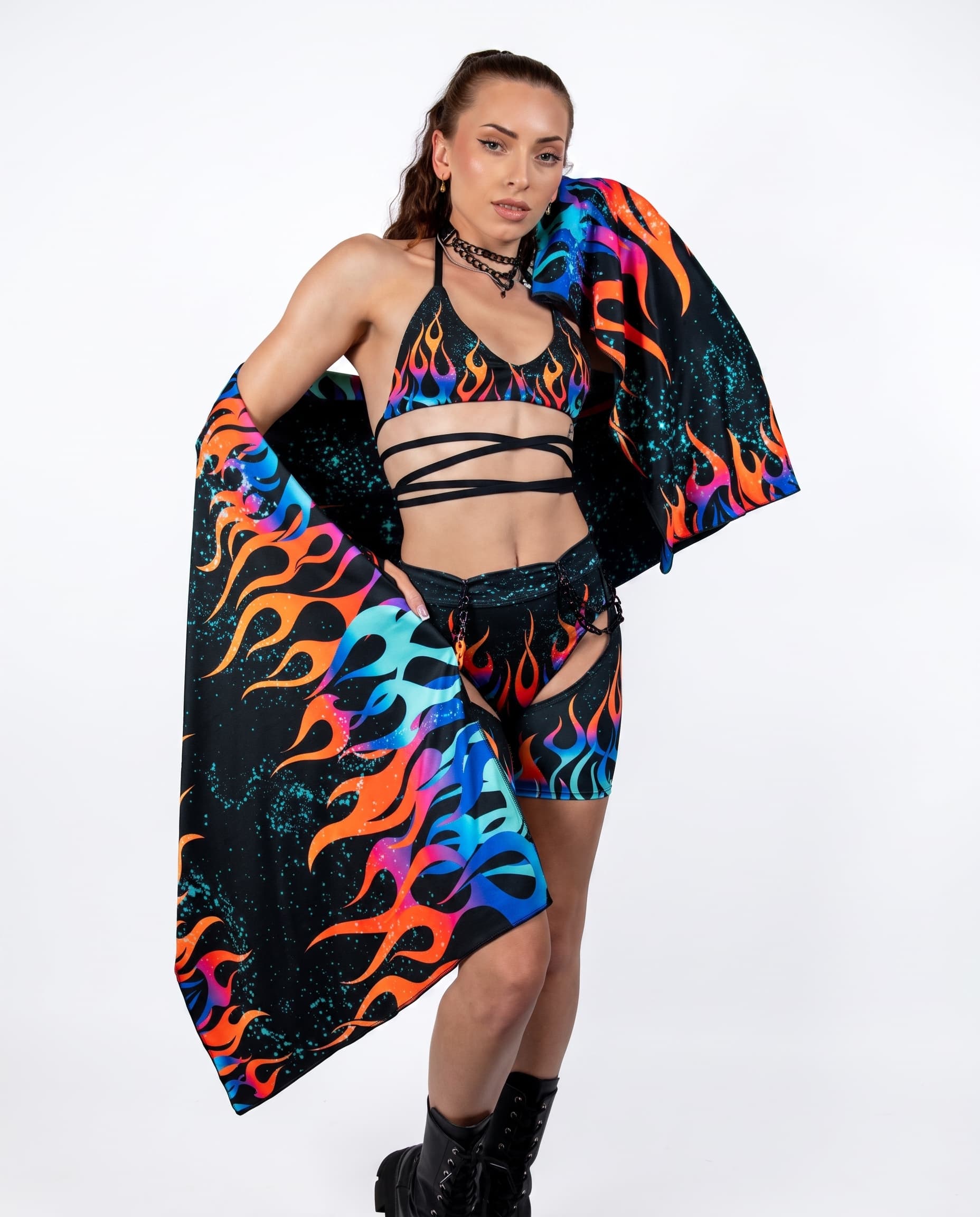
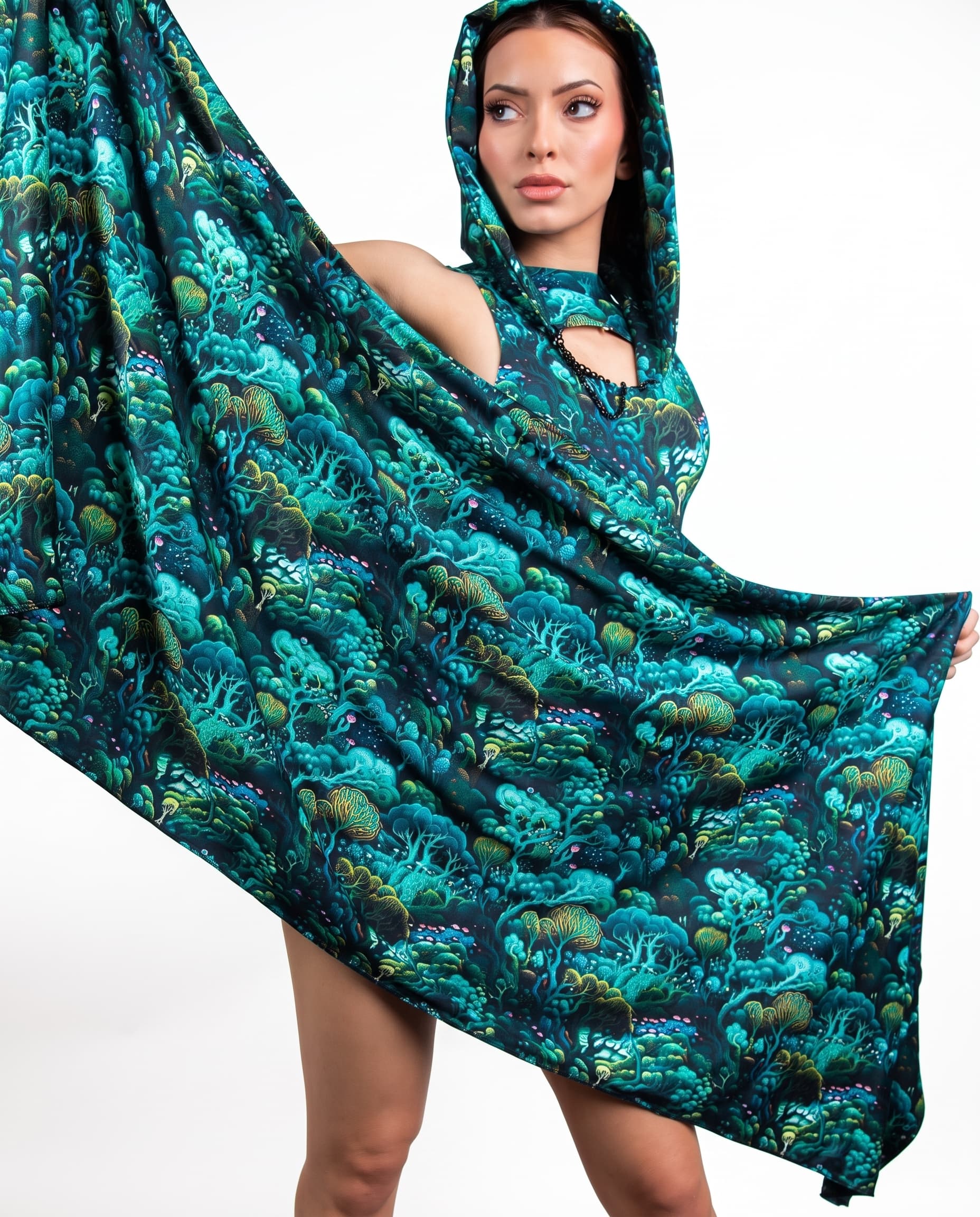
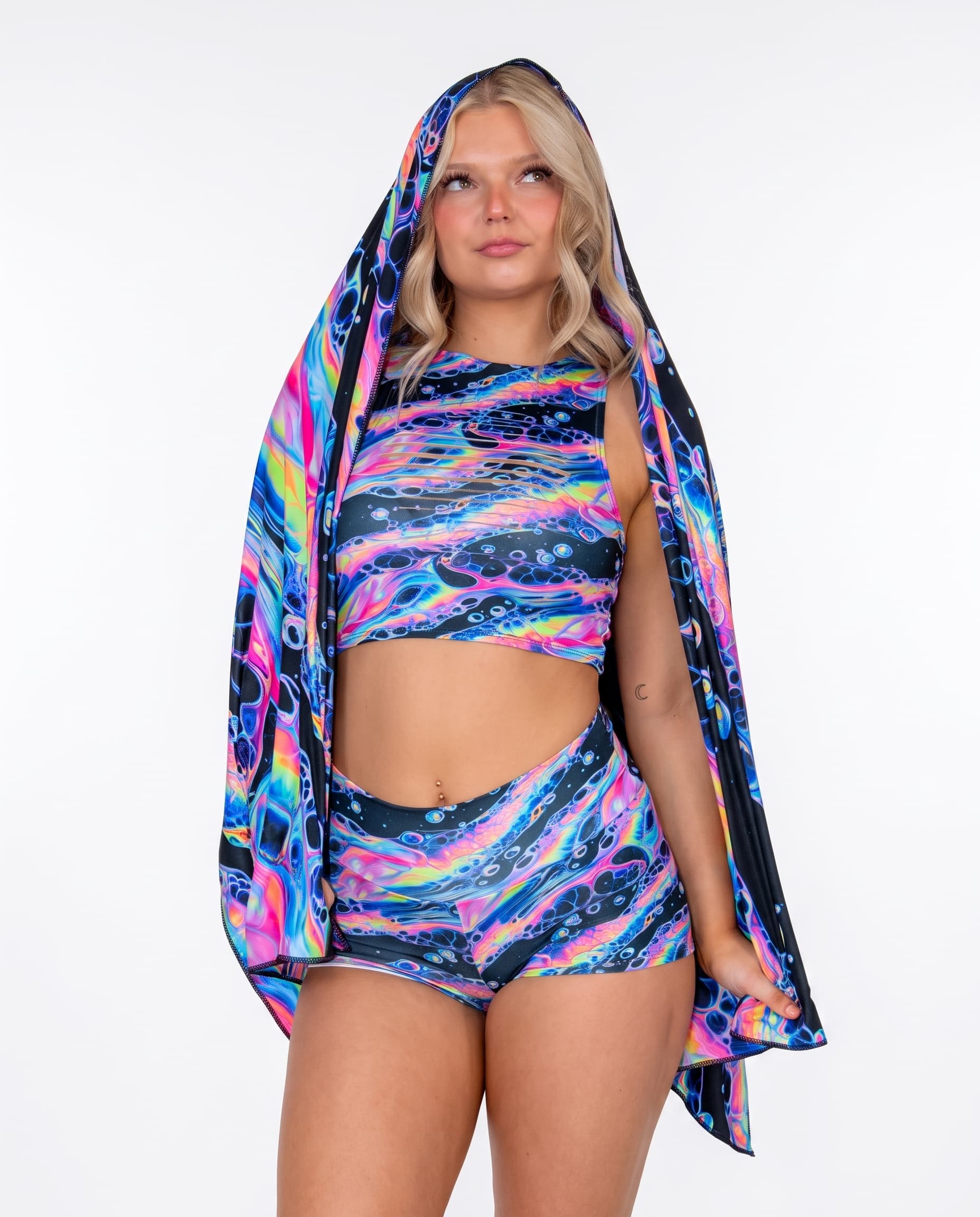
The Acid Sky Festival Scarf and Blaze Festival Scarf are two FRW listings you can use for this comparison. Open each full product view before choosing by a cropped shopping thumbnail. Compare the actual listing details as well as the pictures, and check the current options on the product page.
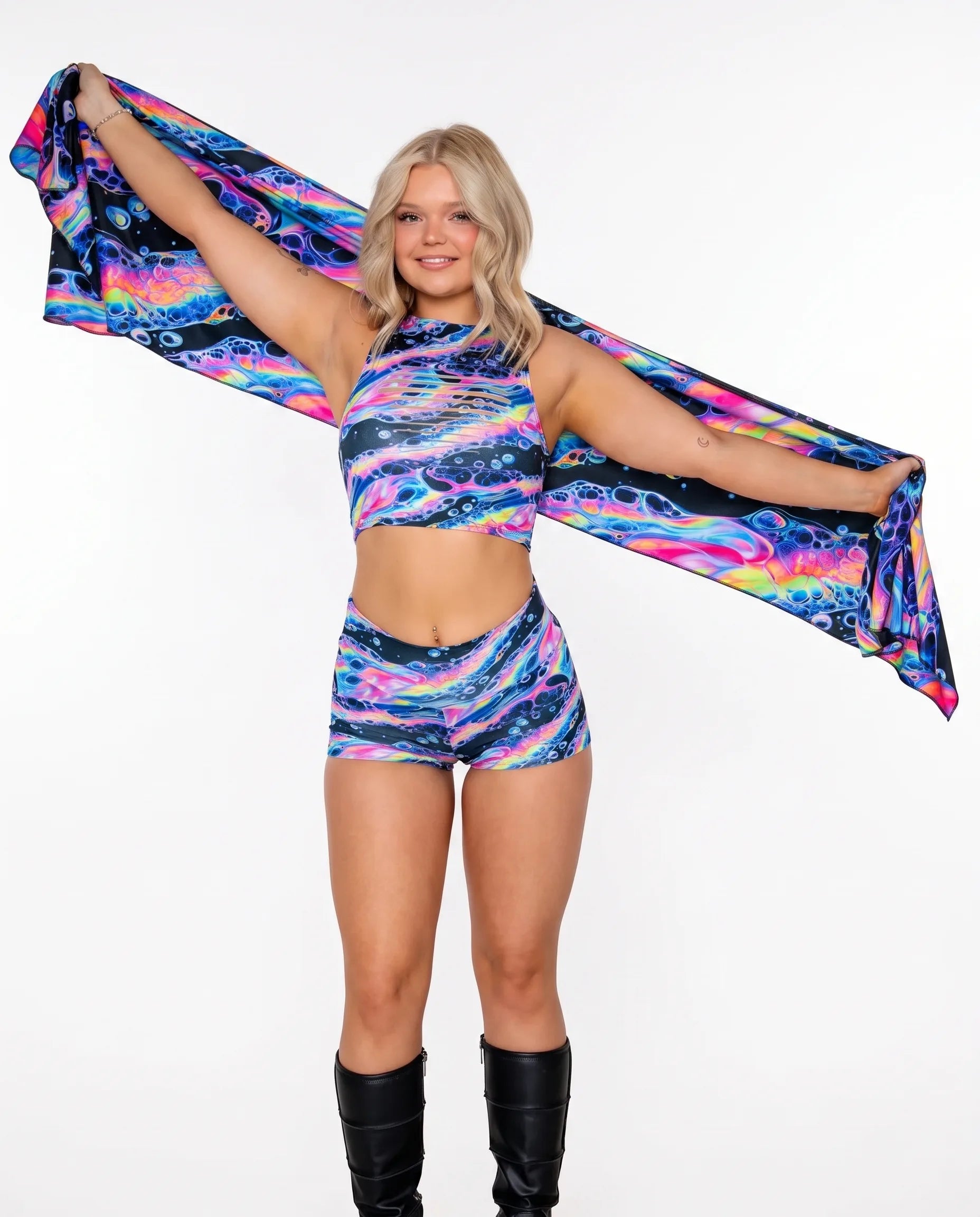
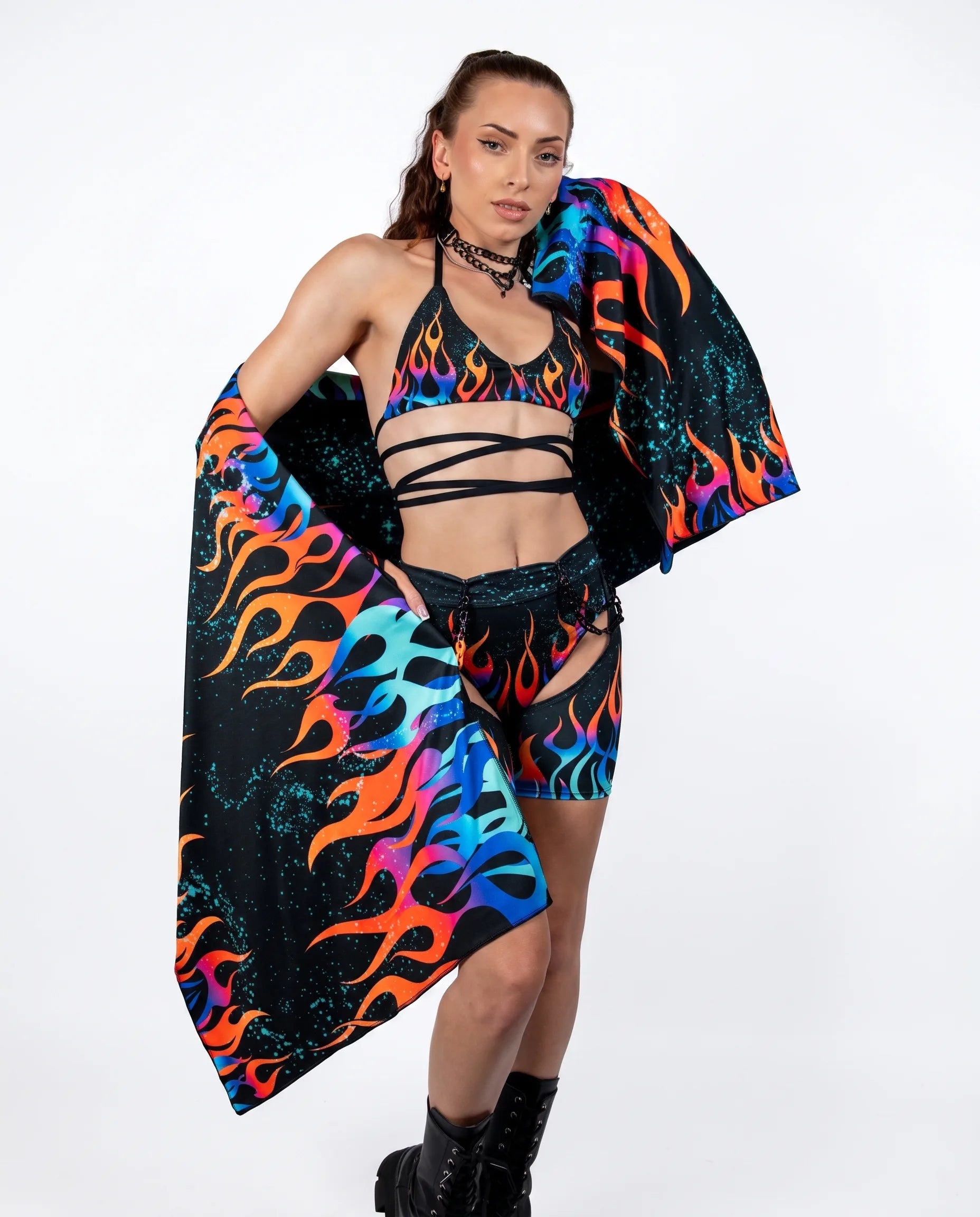
These two studio views show why a full photograph matters. Acid Sky's connected bands of pink, blue and yellow travel across the open scarf. Blaze places larger flame shapes beside areas of dark ground and fine teal speckling. That gives you a useful visual question: do you want an all-over flow of color, or a graphic with larger distinct shapes?
Both views show the scarves alongside matching printed pieces, so you can also see how a repeated graphic builds a coordinated look. They do not establish a measured width, packed size or temperature benefit. Use the photos for the questions they answer well, then use the product details for the rest.
When coordinating a graphic, pick the part you want to repeat. That might be the same print on another piece, one shared color, or a quiet base that lets the scarf become the focal point. Let one piece lead and give the others a supporting role. Our psychedelic collection offers a place to explore that visual relationship.
Lighting effects need their own evidence. Check item-specific information and photographs taken under the conditions you care about. A normal product photograph shows you that view of the piece; a documented blacklight photograph can answer a different question. Keep the two together when you compare.
A five-minute buying check
- Name your main use. Decide whether the priority is a shoulder drape, a tie, a graphic focal point or another supported use.
- Read the composition. Confirm the material instead of inferring it from scarf or pashmina in a search result.
- Find the dimensions. Compare them with a piece you own. Ask for missing measurements.
- Inspect the finish and care. Check the edges and decide whether the instructions work for you.
- See the whole print. Look beyond the thumbnail, then make sure the exact piece and option you want are available.
That leaves you with a decision you can explain: this piece has the material, size and visual character you were looking for. Once those basics are settled, choosing the pattern is the fun part.
FAQ
Is a rave pashmina always cashmere?
No. Treat the shopping phrase as a reason to inspect the actual fiber information. Traditional pashmina refers to a fine goat fiber; that does not establish the composition of every accessory returned by a festival search.
Does fringe tell me what the scarf is made from?
No. Fringe describes an edge finish. Read the material information separately, and inspect the finish for the way you want to wear the piece.
Is one size enough information to compare two scarves?
No. Look for length and width. Those measurements help you compare coverage and tying options without guessing from a model's proportions.
Can I use one scarf in several ways?
You can choose a piece around several uses when its dimensions, construction and care support them. Check venue rules for breaks and ground use, and avoid assuming that a scarf provides an unverified protective or weather-related benefit.