
The science of sound reveals something profound about the festival experience — music doesn't just entertain your brain, it fundamentally rewires it. Every bassline, every melodic build, every earth-shaking drop triggers a cascade of neurochemical reactions that shape how you feel, how you connect, and how you remember the night. Understanding what's happening beneath the surface can transform the way you experience your next event and deepen your appreciation for the culture that brings us all together.
If you're someone who lives for that moment when the lights drop and the first beat hits, you already know music does something powerful. Now let's explore exactly what that something is — and why festivals are, quite literally, one of the most transformative experiences your brain can have.
The Power of Rhythm: Why Your Brain Locks Into the Beat
Neural Synchronization and Collective Connection
When you listen to music in a live setting, your brain's neurons begin to synchronize with the rhythm — a phenomenon neuroscientists call "neural entrainment." Your auditory cortex doesn't just passively receive sound; it actively predicts what comes next, locking your brainwaves into the tempo of the track. In a festival environment, surrounded by thousands of people whose neurons are doing the same thing simultaneously, this creates a kind of collective brainwave synchronization.
This is why a crowd can feel like a single organism during a peak set. It's not just metaphor — your brains are literally vibrating on the same frequency. Research published in Nature Neuroscience has demonstrated that rhythmic auditory stimuli can entrain neural oscillations, aligning brain activity across listeners. At a festival, this synchronization fosters a deep, almost primal sense of connection with the people around you.
Movement, Dance, and the Motor Cortex
Rhythmic patterns don't just activate your auditory system — they fire up the motor areas of your brain, including the basal ganglia and supplementary motor cortex. This is your brain's way of saying: move. The compulsion to dance isn't a choice so much as a neurological inevitability when the beat is right.
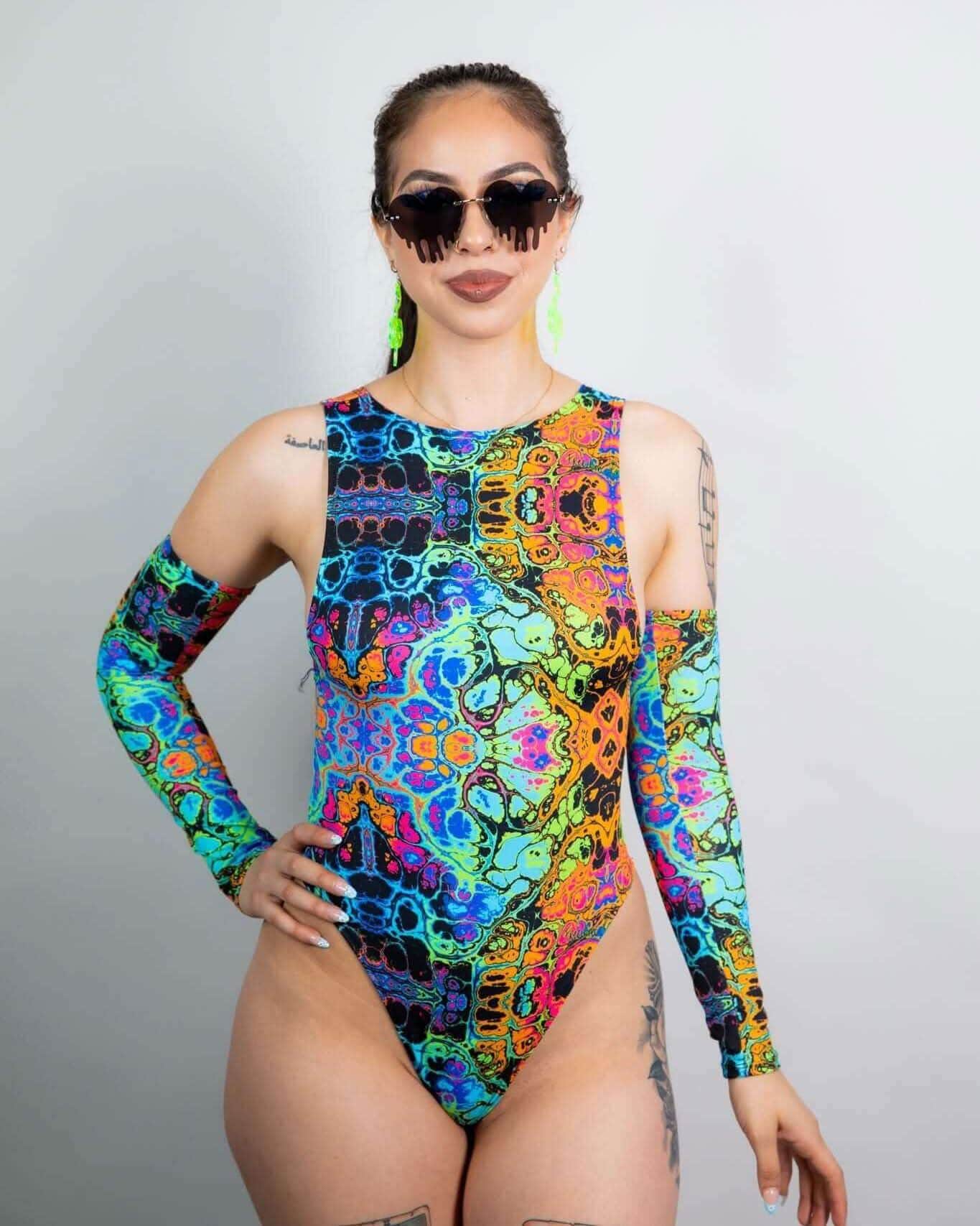
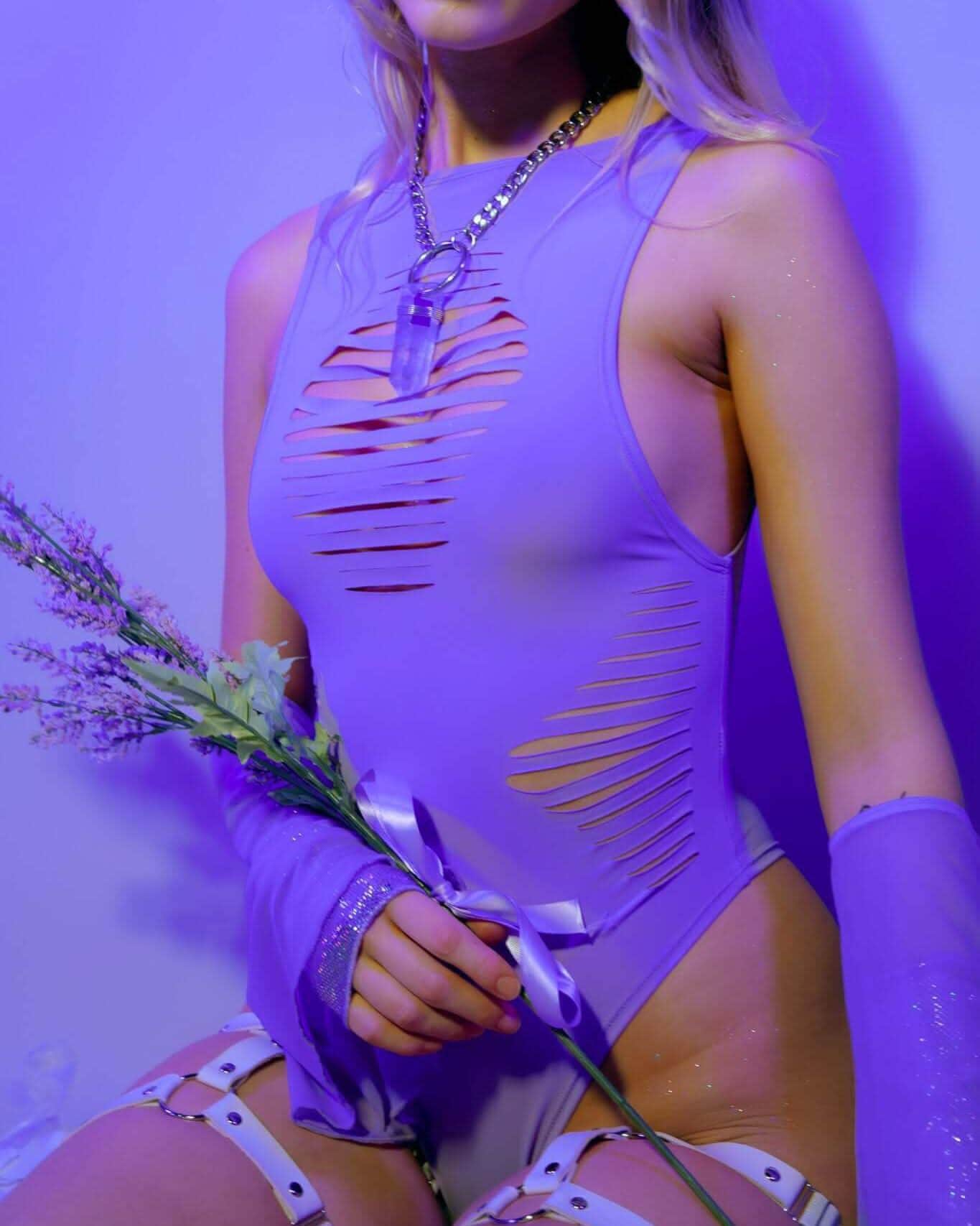
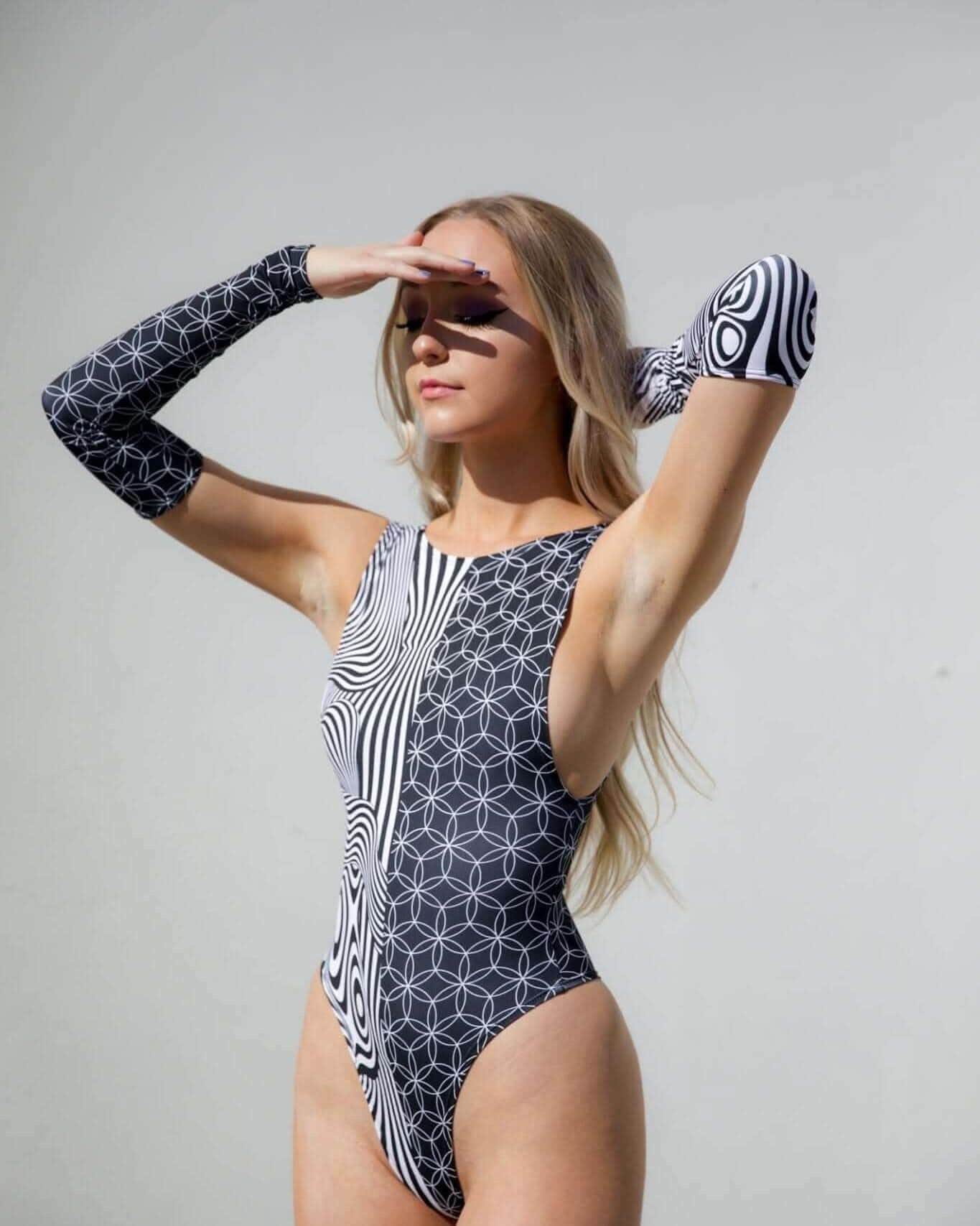
And that movement carries real benefits. Dancing releases endorphins, improves cardiovascular health, and creates a feedback loop of physical and emotional pleasure. Picture yourself in the middle of a packed crowd, your body moving instinctively, wearing rave bodysuits that flow with every movement — that's not just fun. That's your brain and body in a state of integrated, rhythmic bliss.
Emotional Impact: The Neurochemistry of Festival Euphoria
Dopamine and the Reward System
Listening to music triggers the release of dopamine, the neurotransmitter most associated with pleasure and reward. A landmark study from McGill University showed that dopamine surges during moments of peak musical pleasure — those goosebump-inducing builds and drops that define festival sets. Your brain treats a perfectly timed beat drop the same way it treats food, connection, or any other survival-relevant reward.
In a festival context, this effect is amplified dramatically. The volume, the subwoofer vibrations you feel through your chest, the visual spectacle of laser arrays cutting through fog — all of these sensory inputs compound the dopamine response. It's why a track you've heard a hundred times on headphones can feel completely transcendent when experienced live at Electric Daisy Carnival or a similar large-scale event.
Emotional Resonance and Crowd Energy
Music's ability to evoke emotion is well-documented — joy, melancholy, nostalgia, triumph. But what makes festivals unique is the amplification effect of collective emotion. When ten thousand people experience the same emotional arc at the same moment, mirror neurons fire and emotional contagion takes over. Your brain reads the energy of the crowd and intensifies your own emotional response accordingly.
This is why festivals can feel so cathartic. That moment when a vocal melody soars over a deep house groove and you look around to see strangers with tears in their eyes — that's not weakness. That's the most sophisticated emotional processing system on the planet doing exactly what it was designed to do.
Memory and Music: Why Festival Moments Stay With You Forever
How Sound Encodes Memory
The hippocampus, your brain's primary memory center, has a uniquely intimate relationship with the auditory cortex. Music serves as a powerful encoding mechanism for episodic memory — the kind of vivid, narrative memories that feel like re-living an experience rather than just recalling facts. This is why hearing a specific track years later can instantly transport you back to the exact moment you first experienced it live.

The emotional intensity of a festival strengthens this encoding. When dopamine and norepinephrine flood your system during a peak experience, they signal to the hippocampus: this matters, remember this. The result is memories that are not just preserved but crystallized — rich in sensory detail, emotional texture, and personal meaning.
Creating New Memory Anchors
Festivals are memory-making machines because they combine multiple encoding channels simultaneously: sound, sight, touch, social interaction, and emotional arousal. Each element reinforces the others. The song playing when you met your best friend in the crowd. The way your festival tops caught the light during that sunset set. The smell of the night air mixed with fog machine haze. Your brain weaves all of these into a single, vivid memory tapestry that endures for decades.
Social Bonding: The Neuroscience of Rave Community
Oxytocin and the Festival Tribe
Music experienced communally increases the production of oxytocin — often called the "bonding hormone" — which promotes trust, empathy, and social connection. This neurochemical response is one reason festival friendships can feel so immediate and genuine. You're not imagining the depth of that connection with the stranger you danced next to for three hours. Your brain chemistry literally shifted to make it real.
This bonding effect is amplified by synchronized movement. When a crowd dances together, oxytocin production increases further. Anthropologists have observed this same mechanism in tribal drumming circles and communal dance rituals throughout human history. The rave is, in many ways, a modern expression of one of humanity's oldest social technologies.
Shared Experience as Identity
The collective experience of festival culture creates a sense of belonging that extends far beyond the event itself. It's why the rave fam feels like family — because, neurologically, your brain processes these shared musical experiences using the same social bonding pathways it uses for close relationships. Wearing matching rave outfits with your crew, coordinating looks, and expressing your identity together all reinforce this sense of tribal belonging.
This is the real reason people return to festivals year after year. It's not just about the lineup. It's about returning to a community where your brain feels safe, connected, and alive.
Stress Reduction: How Festivals Actually Calm Your Nervous System
Lowering Cortisol Through Sound
It might seem counterintuitive — the chaos, the crowds, the volume — but research consistently shows that music reduces cortisol, the body's primary stress hormone. The mechanism is multifaceted: rhythmic entrainment calms the autonomic nervous system, melodic patterns engage the prefrontal cortex in ways that quiet the amygdala's threat response, and the social bonding effects of communal music further buffer against stress.
For many festival-goers, the event itself serves as a crucial pressure-release valve from the demands of daily life. The permission to be fully present — no emails, no deadlines, just sound and sensation — allows your nervous system to downregulate in ways that typical "relaxation" simply can't achieve.
The Transformative Power of Escape
Festivals create a liminal space — a threshold between your everyday identity and something more expansive. Psychologists call this "psychological distance," and it's profoundly restorative. When you step into the festival grounds wearing rave clothing that represents your most expressive self, you're giving your brain permission to shed the accumulated tension of ordinary life.
That sense of freedom — the playful, unbounded feeling of being exactly who you want to be — isn't just emotional. It's reflected in measurable reductions in stress biomarkers and increases in subjective well-being that can persist for weeks after the event.
Cognitive Benefits: How Festival Music Sharpens Your Mind
Creativity and Divergent Thinking
Exposure to diverse musical genres and performances stimulates neural pathways associated with creative thinking. The variety of sounds, tempos, and compositional structures at a multi-stage festival challenges your brain's pattern-recognition systems and encourages divergent thinking — the cognitive mode associated with innovation and problem-solving.
Many artists, designers, and creators cite festival experiences as catalysts for their most inspired work. The sensory richness of the environment, combined with the social permission to think and behave outside normal boundaries, creates ideal conditions for creative breakthroughs.
Focus and Flow States
Certain types of music — particularly instrumental and electronic genres — can induce flow states: periods of deep, effortless focus where your sense of time dissolves and performance peaks. The repetitive, layered structures of house, techno, and trance music are especially effective at sustaining these states, which is one reason electronic music festivals can feel almost meditative despite their intensity.
This isn't accidental. Many electronic producers consciously design tracks with psychoacoustic principles in mind, using specific frequency ranges, tempo progressions, and spatial audio effects to guide the listener's mental state. You're not just hearing music — you're being neurologically guided into an altered state of consciousness.
Sensory Integration: The Full-Spectrum Festival Experience
Multisensory Processing and Immersion
Festivals engage far more than your auditory system. Visual effects — lasers, LED arrays, projection mapping — synchronize with musical elements to create cross-modal sensory experiences that activate multiple brain regions simultaneously. Add in the tactile sensation of bass frequencies vibrating through your body, the feel of fabrics like rave shorts and flow-friendly materials against your skin as you dance, and the ambient smells of the environment, and you have a multisensory experience of extraordinary richness.

Your brain's ability to integrate these multiple sensory streams into a unified experience is called "multisensory integration," and it's associated with heightened perception, increased emotional intensity, and stronger memory formation. Festivals are, in neurological terms, one of the most complex and stimulating environments a human brain can encounter.
Sensory Intensity and Transcendent States
At peak intensity, the sensory richness of a festival can push your brain into states that psychologists describe as "absorption" or "self-transcendence" — moments where the boundary between self and environment seems to dissolve. This isn't mystical thinking; it's measurable neuroscience. High-intensity multisensory stimulation can temporarily reduce activity in the default mode network, the brain region associated with self-referential thinking and ego, producing feelings of unity, euphoria, and boundlessness.
This is the moment festival culture was built around. The drop hits, the lights explode, the crowd surges, and for a few seconds you're not a separate person watching a show — you're part of something larger than yourself.
Bringing the Science Home
Understanding the neuroscience of music at festivals doesn't diminish the magic — it deepens it. Every dopamine surge, every oxytocin-fueled connection, every bass-driven moment of transcendence is your brain doing something extraordinary. These experiences aren't frivolous entertainment. They're some of the most powerful neurological events available to us as human beings.
Next time you step onto festival grounds, take a moment to appreciate the complex interplay between sound and your nervous system. Feel the bass synchronize your neurons. Notice the moment when a crowd becomes a single, breathing organism. Recognize that the connections you make and the memories you create are being encoded at the deepest levels of your brain's architecture.
And when you're choosing what to wear — the rave outfits that help you become the version of yourself that belongs in that moment — know that self-expression is part of the science too. What you wear shapes how you feel, how you move, and how fully you surrender to the experience. Dress like you mean it.