

If you've ever been to a live EDM event, there's no doubt you've run into a shuffler or two. Shufflers are those people you see effortlessly going hard while seemingly using magic to navigate around the dance floor. Ever felt a tad bit jealous? Me too. Just like koalas, the Hemsworth brothers and a bunch of other really cool stuff, shuffling started in Australia, hence its official name, the Melbourne Shuffle.
Shuffling is a combo of two dance moves — the T Step and the Running Man. And they are in fact quite simple on their own; I think it's safe to say we've all done the Running Man a time or two in our lives. Maybe you've even thought about learning to shuffle. It probably went something like this:
Wow, that looks extremely awesome and extremely complicated.
Oh, it's just a combo of two fairly simple moves? I bet I can do that.
Nope, I can't do that...
I know I've been there. Every show seems to reignite an interest for shuffling. After the last burst of inspiration, I did some research and came across an amazing video I credit as the key to shuffling for anyone who's interested.
The Melbourne Shuffle: Where It All Started
The Melbourne Shuffle emerged from underground rave warehouses in Australia during the late 1980s and early 1990s. What started as an improvised dance style in dimly lit clubs has evolved into one of the most recognizable moves in the EDM scene worldwide. By the mid-2000s, shuffling had spread globally through YouTube videos and festival culture, becoming a signature style at major events like Electric Daisy Carnival and Tomorrowland.
Today's shuffle culture is more than just a dance — it's a form of self-expression that brings the rave fam together. When you see a circle form around skilled shufflers on the dance floor, you're witnessing a tradition that's been passed down through generations of ravers.
Breaking Down the Basics: T Step and Running Man
The beauty of shuffling lies in its fundamental simplicity. Master these two core moves, and you're on your way to becoming the dancer everyone stops to watch.
The Running Man
Start with the Running Man — it's the move you've probably attempted at every wedding since middle school. One foot slides back while the other stays planted, then you alternate. The key difference in shuffle-style Running Man? Keep your weight forward, stay on your toes, and make those slides smooth and controlled. Think gliding, not stomping.
The T Step
The T Step (also called the Charleston) is where things get interesting. Your feet move in a T-shape pattern — one foot kicks out to the side while the other pivots inward, then you switch. It looks complex, but once your muscle memory kicks in, it becomes second nature. The trick is keeping your knees slightly bent and your core engaged.
What to Wear When You're Learning to Shuffle
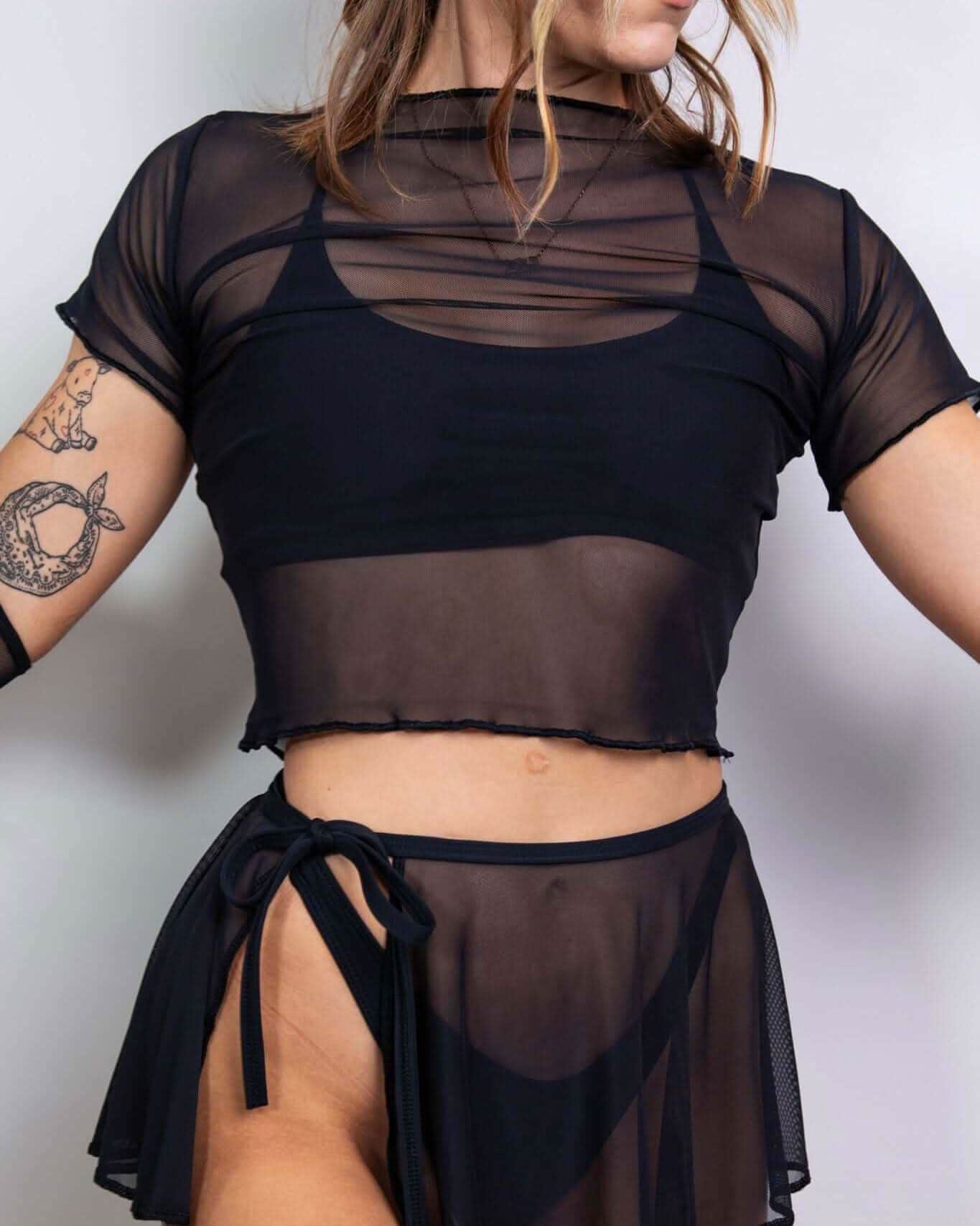
Let's talk about the practical side: you need the right gear to shuffle comfortably. Footwork this intense requires clothing that moves with you, not against you. Look for rave bottoms with stretch and breathability — think flowy pants, comfortable shorts, or leggings that won't restrict your leg movement.
Many shufflers swear by lightweight rave tops that won't weigh you down when you're going hard for hours. And if you're practicing at home before taking your moves to the festival, comfortable athleisure works perfectly. Once you've mastered the basics, you'll want a full rave outfit that lets you express your style while you dance — because looking good and feeling confident makes every move better.
Tips for Mastering the Shuffle
Here's what the rave fam wishes someone had told them when they started:
Start slow. Seriously. Everyone wants to immediately shuffle at 128 BPM, but you'll build better muscle memory at half-speed. Once the movements feel natural, speed comes easily.
Practice on smooth surfaces. Carpet is your enemy when learning to shuffle. Find a smooth floor — hardwood, concrete, or even a garage — where your feet can glide freely.
Film yourself. It sounds awkward, but watching your own movement helps you spot what needs adjustment. You'll catch things you can't feel in the moment.
Focus on one move at a time. Don't try to combine the Running Man and T Step until each one feels comfortable on its own. Build your foundation first.
Stay relaxed. Tension is the enemy of smooth movement. Keep your upper body loose, shoulders down, and let your legs do the work.
Your Shuffle Tutorial
This tutorial breaks down both moves step-by-step, showing you exactly where your weight should be, how your feet should move, and how to transition between steps. Watch it through once, then practice along with the video until the movements start to click.
Taking Your Shuffle to the Festival
Once you've got the basics down in your living room, it's time to test your moves in the wild. Your first festival shuffle session will feel different — the energy of the crowd, the bass vibrating through your chest, the lights hitting at just the right moment. Don't be surprised if you're suddenly ten times better (or if you completely blank and forget everything). Both are totally normal.
The rave fam is incredibly supportive of dancers at every skill level. You're not going to be judged for learning — you're going to be celebrated for trying. Some of the best moments at festivals happen when experienced shufflers notice someone practicing and offer tips or encouragement. That's the culture we're building.
And here's a secret: the perfect outfit helps with confidence more than you'd think. When you're wearing festival bodysuits or gear that makes you feel like your most authentic self, you dance differently. You commit to the moves. You stop worrying about how you look and start feeling the music.
Join the Shuffle Community
Shuffling isn't just about individual skill — it's about community. Connect with other shufflers on social media, join shuffle practice groups in your area, and don't be shy about asking for tips from dancers you admire at shows. Most shufflers remember what it was like to learn and are genuinely excited to help newcomers improve.
See you on the dance floor, future shuffler. Watch, learn, practice, and most importantly — enjoy the journey.
Desiree Roughton: Writer and Rhythm Chaser